Top 10 Benefits of Industrial Automation for Global Businesses?
Industrial automation is revolutionizing global businesses. As noted by Dr. Emily Johnson, an industry expert, "Automation is not just a trend; it is the future of productivity." This statement highlights the shift many companies are making towards automated solutions. The benefits are numerous, ranging from increased efficiency to cost savings.
In today's rapidly changing market, businesses must adapt. Industrial automation provides tools that help firms stay competitive. Companies can streamline operations, ensure quality, and improve safety. However, challenges remain. Implementing automation requires careful planning and can lead to job displacement. Balancing these factors is essential for sustainable growth.
As industries embrace high-tech solutions, the importance of human oversight is clear. Automation can drive productivity, but it lacks the human touch. Companies must consider how to integrate technology and human labor effectively. This consideration will define the future landscape of work. The promise of industrial automation is significant, but the path to implementation is filled with complexities that warrant reflection.
Overview of Industrial Automation in Global Businesses
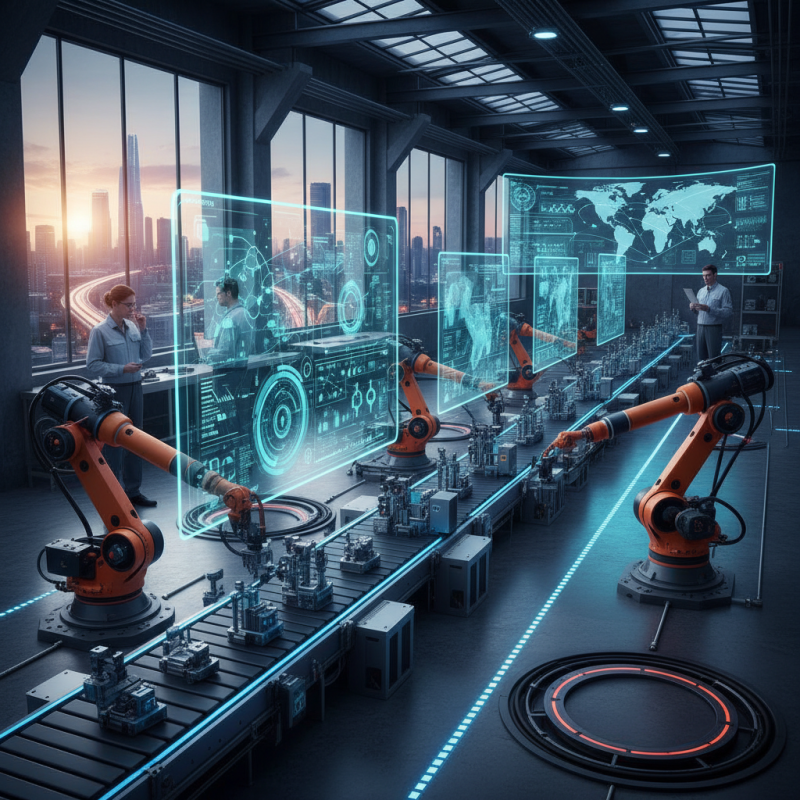
Industrial automation has transformed how global businesses operate. It integrates advanced technology to enhance efficiency and reduce operational costs. Companies increasingly adopt automated systems to streamline production and improve quality. In industries like manufacturing, logistics, and agriculture, automation plays a crucial role in enhancing productivity.
Tips for businesses:
Start small. Don’t overwhelm your team with drastic changes. Gradual implementation can allow for smoother transitions. Invest in employee training early in the process. This ensures everyone understands new technologies and systems.
Despite the benefits, some challenges arise. Resistance to change can hinder progress. Employees may feel threatened by automation. It is essential to foster a culture of positivity around these advancements. Open communication is key in addressing fears and building trust. Engaging with your workforce can facilitate smoother adoption of new tools.
Increased Efficiency and Productivity through Automation
Industrial automation is revolutionizing productivity in global businesses. Companies adopting automation can see efficiency gains of 20-30%, according to research from McKinsey. By streamlining processes, businesses reduce labor costs and minimize errors. Automation handles repetitive tasks, allowing human workers to focus on complex issues. This shift is crucial for competitiveness in today’s fast-paced market.
Leveraging automation can also lead to improved accuracy in production. A report from the International Federation of Robotics shows that automated systems can operate 24/7 with reduced downtime. This consistent performance elevates output levels significantly. However, integration poses challenges. Many companies struggle with gaps in training their workforce to adapt to new technologies.
Tips: Embrace a culture of continuous learning. Encourage employees to gain skills in automation technologies. Monitor performance metrics closely to identify bottlenecks. Feedback loops are essential for refining processes. Regular assessments can illuminate areas needing improvement. Balancing technology with human input creates a more resilient workforce, ultimately driving sustainable growth.
Cost Reductions Achieved via Automation Technologies
Industrial automation has revolutionized the way global businesses operate, particularly in cost management. According to recent industry reports, implementing automation technologies can reduce operational costs by up to 30%. This substantial reduction directly impacts profitability. Automation minimizes human error, which often leads to costly mistakes in production lines.
The integration of automated systems in manufacturing can also enhance efficiency. A study by the International Federation of Robotics indicates that factories using automation technologies typically increase their output by around 20-25%. This not only allows businesses to meet market demands but also helps in reallocating resources more effectively.
However, transitioning to automation doesn't come without challenges. The initial investment can be significant, often deterring smaller businesses. Additionally, there's a learning curve associated with new technologies, which can lead to temporary disruptions in workflow. Companies must carefully weigh these factors against potential savings. Balancing short-term costs with long-term benefits is crucial for sustained growth.
Enhanced Quality Control and Consistency in Production
Industrial automation significantly enhances quality control and consistency in production processes. According to a report by McKinsey, companies implementing automation can achieve a 15-30% increase in manufacturing quality. This improvement stems from precise machine operations. Automated systems minimize human error, resulting in fewer defects.
Quality control becomes more reliable with real-time monitoring. Sensors and data analytics track production metrics continuously. A report from Deloitte notes that automation can reduce variability in production by up to 40%. This consistency is crucial for meeting customer expectations. However, some businesses face challenges in adopting these technologies fully. Resistance to change and the initial costs can hinder progress.
Moreover, not all automated systems are foolproof. Technical glitches can cause production delays. It’s essential to regularly assess and maintain automated equipment. This practice ensures that quality standards remain high. Balancing machine efficiency with human oversight is an ongoing challenge. As industries evolve, companies must adapt their quality control measures to retain competitiveness.
Top 10 Benefits of Industrial Automation for Global Businesses
| Benefit |
Description |
Impact on Production |
| Consistency |
Ensures uniform product quality with minimal variance. |
Significant reduction in defects and rework. |
| Efficiency |
Streamlines production processes to reduce idle time. |
Increased output and productivity. |
| Cost Reduction |
Decreases labor and operational costs through automation. |
Higher profit margins for businesses. |
| Reduced Human Error |
Lightning-fast precision and less variability in production. |
Enhanced overall product quality. |
| Scalability |
Easily adjust production volume to meet market demands. |
Flexibility in operations. |
| Better Safety |
Reduces risks associated with manual labor. |
Safer working environments. |
| Data Collection |
Automated systems gather real-time data for analysis. |
Informed decision-making processes. |
| Reduced Lead Times |
Quickens the production cycle from order to delivery. |
Improved customer satisfaction. |
| Sustainability |
Optimizes resource use, reducing waste and energy consumption. |
Positive environmental impact. |
| Enhanced Workforce Focus |
Allows employees to focus on higher-value tasks. |
Increased job satisfaction and innovation. |
Improved Safety and Reduced Workplace Hazards with Automation
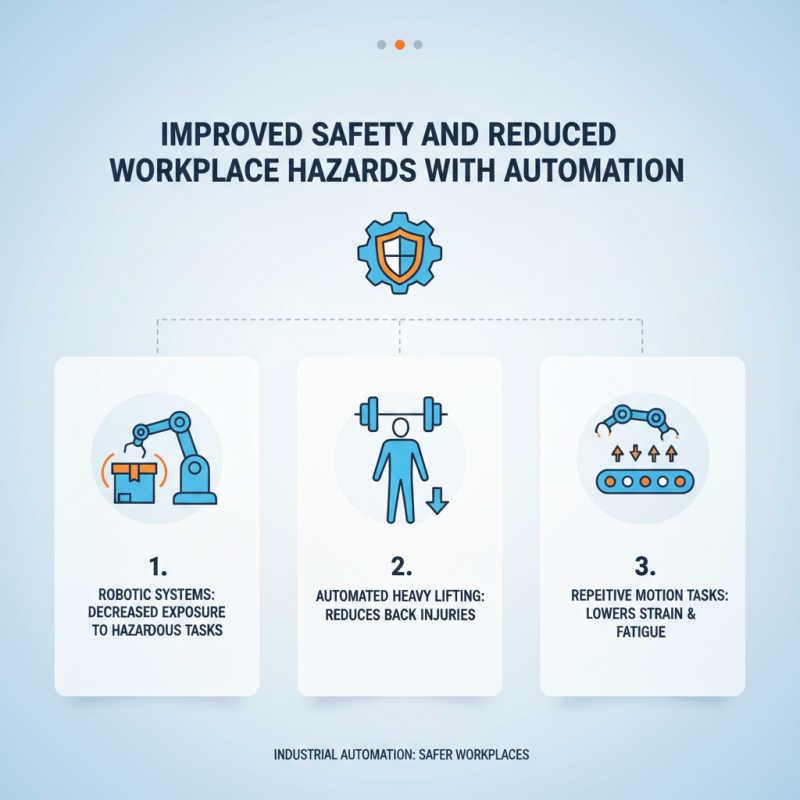
Industrial automation significantly enhances safety in workplaces. By deploying robotic systems, human exposure to hazardous tasks decreases. For example, automated machinery handles heavy lifting, reducing the risk of back injuries. In assembly lines, tasks that involve repetitive motion are shifted to machines, lowering instances of strain and fatigue among workers.
Moreover, automation improves monitoring and control over potential hazards. Sensors can detect unsafe conditions in real-time, providing immediate alerts. This technology allows for quick interventions, preventing workplace accidents. While automation increases safety, it is important to acknowledge potential job displacement concerns. Workers must adapt and upskill to remain relevant in an evolving job market. Though the transition may be challenging, it drives innovation in skill development and creates new job opportunities that prioritize safety.
Furthermore, companies can cultivate a culture of safety through automation. Training employees to work alongside technology fosters teamwork and collaboration. While the benefits are clear, businesses must continually evaluate their automation strategies. They should ensure these systems are tailored to meet safety needs without compromising job security. Balancing technology and human roles requires thoughtful planning and ongoing reflection.