- sale@instructrobot.com
- Dallas, TX , United States


Choosing the best China One Phase Transformer supplier requires more than comparing catalog prices. The real test begins with design evidence, factory discipline, and service performance after delivery.
John J. Winders Jr., author of Power Transformers: Principles and Applications, describes a transformer as “a static device that transfers electrical energy from one circuit to another.” This simple definition hides important decisions. A reliable One Phase Transformer must match the primary voltage, secondary voltage, frequency, load profile, insulation class, and installation environment. Small errors can produce humming, overheating, voltage instability, or shortened service life.
The strongest Chinese suppliers provide traceable copper, verified core steel, routine test records, and clear drawings before production. Ask for temperature-rise results, no-load losses, load losses, impedance, and dielectric test data. IEC 60076 alignment also matters when the transformer serves industrial or export projects. A serious manufacturer should explain tolerances, not merely promise “high quality.”
Factory experience matters. I would inspect winding machines, vacuum drying equipment, oil-processing systems, and final inspection areas. Customer references are useful, but they are not perfect evidence. Some reviews may reflect easy applications, not harsh operating conditions. That deserves careful reflection.
The best supplier is therefore not always the cheapest. It is the partner that communicates clearly, tests consistently, documents honestly, and supports replacement parts. Before signing, request a sample inspection, production schedule, warranty terms, and realistic shipping plan. A dependable One Phase Transformer begins with dependable supplier behavior.
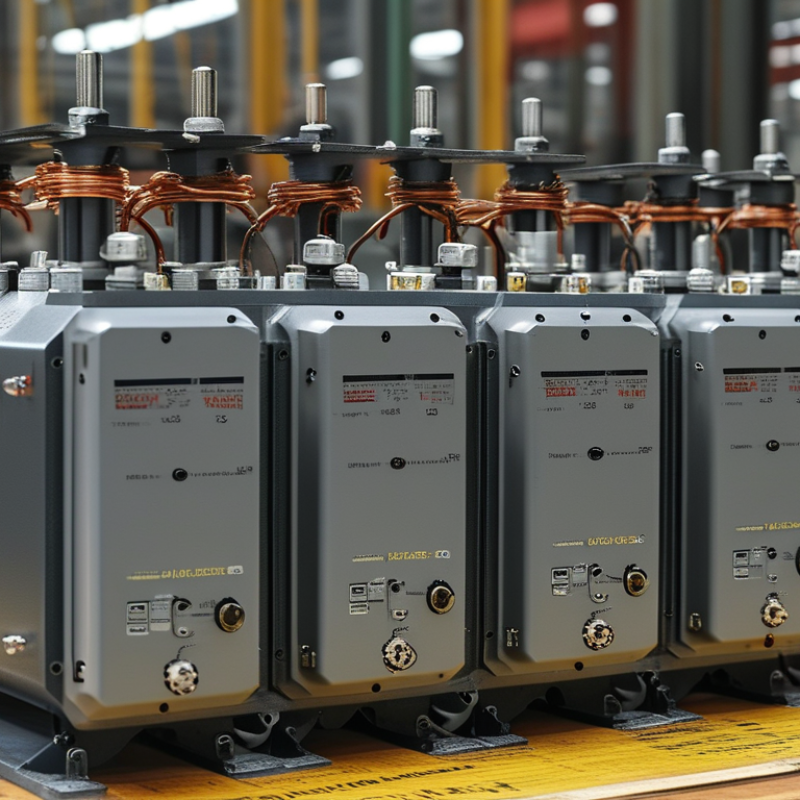
A one-phase transformer transfers electrical energy between circuits through electromagnetic induction. Alternating current enters the primary winding and creates a changing magnetic flux inside the steel core. That flux induces voltage in the secondary winding. The voltage ratio follows the turns ratio: Vp/Vs = Np/Ns. More secondary turns create higher voltage; fewer turns create lower voltage. Frequency normally remains unchanged.
This design suits homes, lighting systems, control panels, and small machinery. There are no moving parts. However, copper resistance produces heat, while the core creates hysteresis and eddy-current losses. The U.S. Department of Energy’s Distribution Transformers Technical Support Document estimated that distribution transformers used about 2.5% of generated electricity in the United States. Efficiency is not a minor detail. Small losses repeat for thousands of operating hours.
IEA’s Electricity 2024 report projected global electricity demand growth of approximately 4% in 2024 and 2025. That pressure makes efficient transformer selection more important. When evaluating a China one-phase transformer supplier, request routine test records, insulation-temperature data, no-load loss, load loss, and short-circuit test evidence. IEC 60076 provides a useful technical reference for transformer design and testing. A catalog rating alone is insufficient. I have seen specifications look excellent, yet installation conditions changed the result. Ambient heat, unbalanced loading, ventilation, and cable length can affect performance. Field verification still matters.
| Evaluation Dimension | Typical Technical Data or Requirement | Why It Matters When Selecting a Supplier |
|---|---|---|
| Transformer Type | A one-phase transformer uses one alternating-current input phase and normally contains one primary winding and one secondary winding around a magnetic core. | The construction is suitable for residential, commercial, control, lighting, and small industrial loads that do not require a three-phase supply. |
| Operating Principle | Alternating current in the primary winding produces a changing magnetic flux in the core. This flux induces voltage in the secondary winding through electromagnetic induction. | A supplier should be able to provide clear technical documentation covering voltage ratio, insulation system, losses, temperature rise, and safety performance. |
| Voltage Ratio | The ideal relationship is approximately V₁/V₂ = N₁/N₂, where V is voltage and N is the number of winding turns. The actual output voltage varies with load and losses. | Correct ratio selection is essential for matching the transformer to the available supply and the connected equipment. |
| Common Input Voltage | Typical low-voltage applications may use 110 V, 120 V, 220 V, 230 V, or 240 V, depending on the electrical system and local requirements. | The supplier should confirm the rated primary voltage, allowable tolerance, frequency, and connection configuration before production. |
| Common Output Voltage | Typical outputs include 12 V, 24 V, 48 V, 110 V, 120 V, 220 V, or 230 V. The correct value depends on the application and equipment rating. | Accurate secondary-voltage design helps prevent malfunction, overheating, insulation stress, and premature equipment failure. |
| Rated Frequency | Most applications are designed for 50 Hz or 60 Hz operation. A transformer should not be operated outside its specified frequency range without engineering approval. | Frequency affects magnetic flux, core loss, heating, noise, and insulation performance. |
| Rated Capacity | Capacity is generally specified in volt-amperes (VA) or kilovolt-amperes (kVA). Common single-phase sizes range from small control transformers below 1 kVA to distribution units of several hundred kVA. | The selected capacity should cover the continuous load and suitable starting or inrush requirements without excessive temperature rise. |
| Load Current | For a single-phase transformer, the approximate full-load current is I = S/V, where I is current in amperes, S is apparent power in VA, and V is voltage in volts. | Current calculations help verify cable size, protective-device ratings, terminal capacity, and compatibility with the intended load. |
| Efficiency | Efficiency is the ratio of output power to input power. Larger, well-designed transformers commonly achieve high efficiency, while small units may have comparatively higher fixed losses. | Higher efficiency reduces operating energy losses, heat generation, and long-term electricity costs. |
| Voltage Regulation | Voltage regulation describes the change in secondary voltage between no-load and full-load conditions. Lower regulation generally means better voltage stability. | Stable output voltage is important for electronics, control systems, lighting, motors, and other voltage-sensitive equipment. |
| Insulation Class | Common thermal insulation classes include Class B, Class F, and Class H, with maximum system temperatures of approximately 130°C, 155°C, and 180°C respectively. | The insulation class should be appropriate for ambient temperature, load profile, enclosure design, and expected service life. |
| Cooling Method | Small units are commonly air-cooled. Larger units may use natural air cooling, forced air cooling, or liquid insulation and cooling, depending on the design. | The cooling method affects installation space, maintenance requirements, noise, thermal performance, and total operating cost. |
| Core Material | Electrical steel, including grain-oriented electrical steel in many power-frequency designs, is used to reduce magnetic losses. Ferrite materials are common in higher-frequency applications. | Core selection influences no-load loss, operating temperature, audible noise, physical size, and efficiency. |
| Winding Material | Windings are commonly made from copper or aluminium conductors. Copper generally offers higher conductivity, while aluminium can reduce weight and material cost when properly engineered. | The supplier should state the conductor material, cross-sectional design, joint method, and thermal performance rather than relying only on a nominal capacity rating. |
| Isolation Function | An isolation transformer normally has separate primary and secondary windings to provide galvanic separation. An autotransformer uses a shared winding and does not provide the same isolation. | Galvanic isolation may be required for safety, noise reduction, maintenance protection, or sensitive control equipment. |
| Tap Configuration | Fixed or adjustable taps may be provided to compensate for supply-voltage variation. Tap positions and adjustment procedures must be clearly identified. | Proper tap selection can maintain the required secondary voltage, but taps must be changed only according to the manufacturer’s safety instructions. |
| Protection Features | Possible features include thermal protection, input fusing, circuit breakers, temperature sensors, surge protection, short-circuit protection, and protected terminals. | Protection should match the application risk, installation standard, fault level, and coordination requirements of the electrical system. |
| Ingress Protection | Enclosure ratings such as IP20, IP23, IP44, IP54, or IP65 indicate protection against solid objects and water according to the applicable standard. | The required enclosure rating depends on whether the transformer is installed indoors, outdoors, in a dusty area, or in a humid environment. |
| Testing and Inspection | Relevant checks may include winding-resistance testing, turns-ratio testing, insulation-resistance testing, dielectric withstand testing, no-load loss, load loss, temperature-rise, and sound-level testing. | A reliable supplier should provide traceable test records and define which tests are routine, type, or special tests. |
| Applicable Standards | Commonly referenced standards include IEC 60076 for power transformers, IEC 61558 for safety of transformers and power supply units, and applicable national electrical standards. | Standards compliance supports consistent design, safety verification, market access, and easier technical acceptance. |
| Customization Capability | Possible custom options include input and output voltage, frequency, VA or kVA rating, taps, terminal layout, enclosure, mounting method, cable entries, noise level, and protection devices. | A capable supplier should confirm feasibility through drawings, a datasheet, tolerance limits, and an approval process before manufacturing. |
| Documentation Quality | Important documents include a datasheet, wiring diagram, dimensional drawing, installation instructions, test report, nameplate information, and maintenance guidance. | Complete documentation reduces installation errors and simplifies commissioning, inspection, troubleshooting, and future replacement. |
| Quality-Control Process | Supplier evaluation should consider incoming-material inspection, winding-process control, impregnation or encapsulation control, assembly inspection, final testing, and product traceability. | A documented quality system is more useful than a general quality claim because it demonstrates how performance is controlled throughout production. |
| Delivery and After-Sales Support | Review the supplier’s production lead time, packaging method, spare-parts policy, warranty terms, technical response time, and ability to support installation and troubleshooting. | Clear commercial and technical support reduces project delays and improves the availability of replacement or customized units. |
| Selection Conclusion | The best supplier is the one that can consistently meet the required voltage, frequency, capacity, insulation, efficiency, safety, testing, documentation, delivery, and support requirements. | Supplier selection should be based on verified technical compliance and lifecycle value rather than price alone. |
Note: Electrical ratings, dimensions, efficiency, temperature rise, and protection requirements vary by transformer design and application. Confirm the final specifications against the approved datasheet and applicable installation standards.