Choosing among industrial robotic systems is not a simple matter of comparing speed, payload, or purchase price. Manufacturers must examine production volume, floor space, worker interaction, maintenance access, and integration costs. A robot that excels in automotive welding may struggle with delicate electronics assembly. Fit matters more than fame.
This guide reviews seven leading robotic systems for manufacturers. Each option is considered through practical criteria, including repeatability, programming effort, safety features, software compatibility, and long-term service support. The analysis also considers real factory conditions, such as tight cells, changing product sizes, dusty work areas, and short changeover windows. Small details can decide large investments.
Robotics pioneer Joseph F. Engelberger once said, “The key to successful automation is to make the machine work for people, rather than people work for the machine.” That principle remains useful today. Effective automation should reduce tiring motions, stabilize quality, and give skilled employees better control over production. It should not create a maintenance puzzle that nobody fully understands. That risk is easy to underestimate.
The strongest industrial robotic systems combine reliable hardware with clear programming and responsive technical support. Yet no system is perfect. Integration delays happen. Training requirements are often underestimated. A thoughtful selection process therefore weighs measurable performance against operator experience and future flexibility. The following comparison aims to support that decision with balanced, evidence-informed guidance.
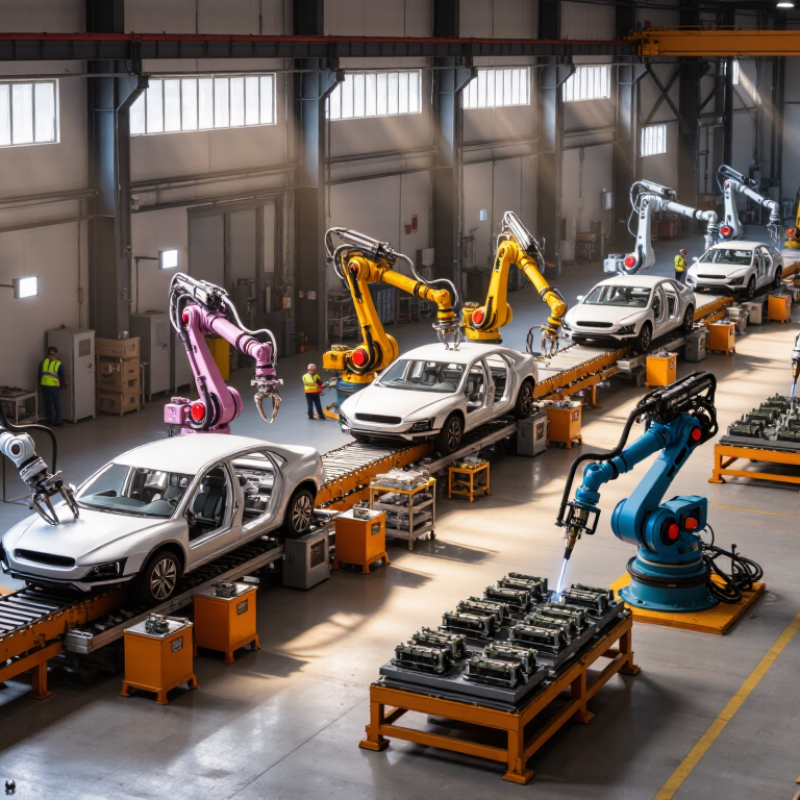
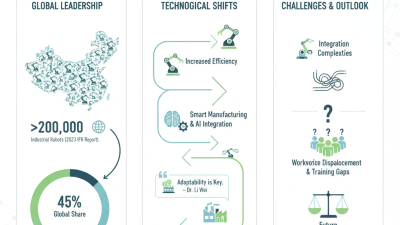
In 2023, manufacturers installed 541,302 industrial robots worldwide, according to the International Federation of Robotics’ World Robotics 2024 report. That was the second-highest annual total on record, despite a slight decline from 2022. The number matters on the factory floor: a robot tending a machine, lifting a heavy part, or applying a precise weld can help teams manage repetitive work and changing production volumes. But installations are not the whole story. They do not show whether systems are well integrated, easy to maintain, or improving workers’ daily tasks.
Asia accounted for about 70% of new installations. China alone installed 276,288 units, while Europe recorded 92,393 and the Americas 55,389, according to the same IFR report. The regional gap is striking. Yet a high installation count does not automatically mean every factory needs a robot. Manufacturers should consider cycle times, part variation, floor space, and the skills available for programming and maintenance. A small cell on a busy line may deliver more value than a larger system that sits idle. That is easy to overlook. Robot adoption is growing, but careful planning still decides whether the investment works.
Global industrial robot installations rose to 541,302 units in 2023, the second-highest annual total on record.
Annual installations, in thousands of units. Figures are rounded estimates except for the reported 2023 total.
7 Best Industrial Robotic Systems for Manufacturers
Classifying industrial robots by payload, reach, axes, accuracy, and end-effector type helps match equipment to real production tasks. The International Federation of Robotics reported 4.28 million industrial robots operating worldwide in 2023. That scale makes careful specification more than a purchasing detail.
Payload includes the gripper and workpiece, not just the part. A robot lifting a 12-kilogram casting may need extra capacity for a heavy tool. Reach determines whether it can access a deep machine enclosure or several pallet positions. Axes shape movement: six-axis systems handle angled welds, while simpler designs may suit straight-line pick-and-place. More axes are not always better.
Accuracy needs close inspection. ISO 9283 distinguishes pose accuracy from repeatability; a robot that returns consistently to one point may still miss the intended point. Check both figures against the process tolerance. End-effectors matter just as much: vacuum cups suit flat cartons, while mechanical grippers can hold irregular parts. Small details count. Oil, dust, and surface texture can defeat a seemingly sound choice. IFR’s World Robotics 2024 report gives useful market context, but plant trials remain essential; catalog figures rarely capture every fixture, cable, or operator-access constraint.
| System Type | Typical Payload | Typical Reach | Axes | Typical Repeatability | Best-Suited End Effector | Common Manufacturing Applications |
|---|---|---|---|---|---|---|
| Small 6-Axis Articulated Robot | 3–12 kg | 500–1,000 mm | 6 | ±0.02–0.05 mm | Electric gripper, vacuum gripper, compact screwdriver, small welding torch | Small-part assembly, machine tending, inspection, light material handling |
| Medium 6-Axis Articulated Robot | 10–50 kg | 1,200–2,000 mm | 6 | ±0.03–0.08 mm | Two-finger gripper, servo gripper, spot-welding gun, dispensing gun | Automotive component handling, assembly, arc welding, machine loading |
| Heavy-Payload 6-Axis Articulated Robot | 80–300 kg | 2,000–3,500 mm | 6 | ±0.05–0.15 mm | Heavy-duty parallel gripper, magnetic lifter, large welding torch, palletizing tool | Palletizing, foundry handling, large-part welding, casting and forging operations |
| SCARA Robot | 2–20 kg | 400–1,000 mm | 4 | ±0.01–0.03 mm | Parallel gripper, vacuum pick head, insertion tool, electric screwdriver | High-speed assembly, screwdriving, electronic component insertion, packaging |
| Delta Parallel Robot | 0.5–8 kg | 600–1,600 mm working diameter | 3–4 | ±0.1–0.5 mm | Vacuum pick head, soft gripper, parallel gripper, food-grade picking tool | High-speed picking, sorting, primary packaging, food and pharmaceutical handling |
| Cartesian Gantry Robot | 10–1,000+ kg | 500–10,000+ mm per axis | 3–6 | ±0.05–0.5 mm | Vacuum lifter, pallet fork, magnetic tool, custom machining or handling fixture | Large-format handling, CNC loading, palletizing, additive manufacturing, storage systems |
| Collaborative Robot | 3–25 kg | 500–1,750 mm | 6 | ±0.02–0.10 mm | Adaptive gripper, vacuum gripper, force-controlled tool, sanding or polishing tool | Flexible assembly, inspection, light machine tending, packaging and short-run production |
Note: Payload, reach, and repeatability ranges are representative specifications for commonly available industrial robot configurations. Actual performance depends on the robot model, mounting orientation, tooling, load center, motion speed, workpiece characteristics, and operating conditions.
7 Best Industrial Robotic Systems for Manufacturers
Cycle time should be measured on the real line, not in a supplier’s demonstration cell. Record loading, welding, inspection, pauses, and tool changes. The International Federation of Robotics reported 541,302 industrial robot installations worldwide in 2023. That scale makes small timing errors expensive. A robot completing a motion in 12 seconds may still miss a 10-second takt time. Test the complete work sequence.
Repeatability is different from absolute accuracy. ISO 9283 defines methods for evaluating robot performance, including position repeatability and path characteristics. Ask for measured results under payload, temperature, and reach conditions matching production. A 0.05-millimeter claim means little if the gripper flexes. It happens. Track at least 30 repeated cycles, then inspect the spread near fixtures, holes, and mating surfaces.
IP rating must match the actual environment. IEC 60529 ratings address protection against dust and water, but they do not prove resistance to chemicals, impact, or high-pressure cleaning. Safety requires layered controls. ISO 10218 covers industrial robot safety, while ISO/TS 15066 provides guidance for collaborative applications. Verify guarding, emergency stops, access controls, speed limits, and risk assessment records. The robot is only one part of the cell. A practical selection matrix should score cycle time, repeatability, IP protection, maintenance access, and compliance evidence. I would also leave space for uncertainty; factory conditions rarely behave like the test report.
Manufacturers now choose robotic architectures by motion, payload, reach, and risk controls. The International Federation of Robotics’ World Robotics 2024 report recorded 541,302 industrial robots installed worldwide in 2023. It also counted about 4.28 million robots operating globally. Articulated robots suit welding, machine tending, and complex six-axis paths. SCARA systems excel at fast assembly, screwdriving, and small-part insertion. Delta robots use parallel arms for rapid picking above conveyors. Their speed is impressive.
Cartesian robots move along linear axes, making their workspace predictable and programming relatively transparent. They fit palletizing, dispensing, and gantry machining.
Cylindrical robots rotate around a column and extend radially, which can simplify handling in compact cells. Polar robots combine rotary and angular movement with radial reach. They remain useful for large work envelopes, although maintenance access may be less convenient. Older layouts are not automatically obsolete.
Collaborative robots can combine force and speed monitoring with human-adjacent tasks, but “collaborative” does not mean risk-free. IFR reporting continues to emphasize application design, training, and safety validation. Manufacturers should test reach, cycle time, guarding, end-effector loads, and recovery behavior on the real line. A small payload error can weaken the entire business case.
No chart replaces a floor trial. Glare affects vision, dust changes gripper reliability, and operators may bypass poor interfaces. The best choice is measurable, specific, and open to revision after production data arrives.
Deployment value depends on more than robot speed. The strongest systems balance integration cost, robot density, flexibility, and measurable ROI. A seven-system shortlist may include articulated arms, collaborative robots, SCARA systems, delta robots, palletizing cells, autonomous mobile robots, and machine-tending platforms. Each serves a different production constraint.
An articulated cell can handle welding or heavy assembly, but it may require guarding, fixtures, safety validation, and skilled programming. That increases initial cost and floor-space demand. Collaborative systems often reduce barriers, yet slower cycle times can limit output. SCARA and delta systems fit tighter footprints and deliver fast pick-and-place work. Mobile robots improve material flow, although route mapping and traffic control add hidden effort.
I assess deployment value through three practical questions:
A basic ROI model should include integration, training, maintenance, tooling, software, and production losses during commissioning. Real projects rarely match the first spreadsheet. I have seen a low-cost cell become expensive after fixture changes and repeated stoppages. Pilot testing with actual parts is safer. Measure cycle time, changeover minutes, defect rates, and operator acceptance for several weeks. Flexibility has value, but only when the factory uses it. A versatile robot can become costly decoration.