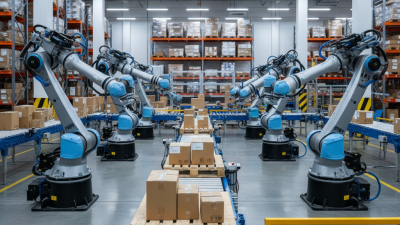
China’s material handling equipment sector serves factories, warehouses, ports, and e-commerce networks. Its manufacturers offer forklifts, conveyors, automated storage systems, pallet shuttles, and sorting equipment. The range is broad. So is the difference between suppliers.
Grand View Research estimated the global material handling equipment market at USD 218.6 billion in 2023. Its report projected a 5.5% compound annual growth rate from 2024 to 2030. These figures indicate substantial demand, but they do not prove that any individual manufacturer is reliable. Buyers still need to check load ratings, control-system compatibility, factory testing, spare-parts access, and service response times. A glossy catalogue cannot answer every operational question.
Lean manufacturing expert Shigeo Shingo wrote, “The most dangerous kind of waste is the waste we do not recognize.” That principle matters when selecting equipment: a fast conveyor may still create bottlenecks if it mismatches picking and packing workflows. This guide introduces leading material handling manufacturers in China and compares their product strengths, engineering capabilities, and support considerations. Treat the comparison as a starting point, not a final audit. Site visits, reference checks, and clear acceptance tests remain essential. Even then, some risks only appear after installation.
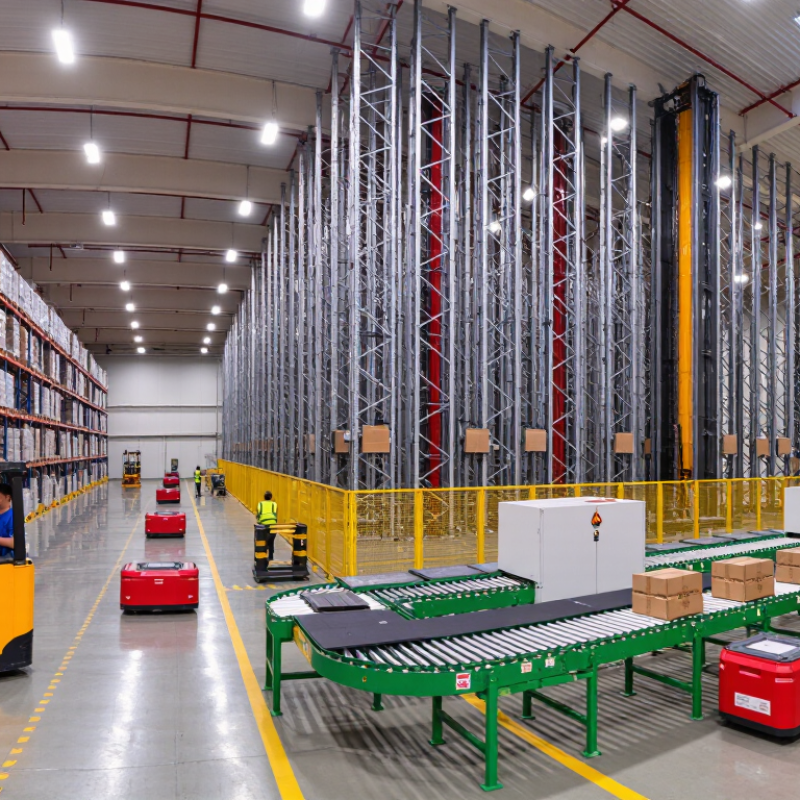
Material handling equipment includes the tools used to move, store, protect, and track goods inside a workplace. The category ranges from simple hand trucks and pallet jacks to forklifts, conveyors, and automated storage systems. Shelving, pallet racks, bins, and lift tables also play a role.
Each serves a different task. A conveyor may move cartons between workstations, while a lift table brings a heavy load to a safer working height.
Equipment choices depend on the load, travel distance, floor conditions, and available space. For example, a narrow aisle may suit a compact truck better than a larger vehicle. Storage systems need to match pallet sizes and load weights, with capacity information checked before use. Sensors and inventory software can help track goods, but they cannot fix unclear processes.
Even a carefully planned layout may feel awkward once workers use it every day. That is worth reviewing.
Tips: Measure aisle widths and turning areas before selecting equipment. Check load dimensions, weight, and lifting height. Ask operators to test the workflow where practical. Small details matter. Keep walkways clear, inspect equipment regularly, and document training. A solution that works on paper may need adjustment on the floor.
China’s material handling industry is organized around a connected supply chain: component makers, equipment manufacturers, automation integrators, and service providers. Components include motors, controls, wheels, and lifting systems. Manufacturers assemble forklifts, conveyors, cranes, and storage equipment. Integrators then connect machines with warehouse software and safety controls. The handoffs matter. A reliable conveyor can still underperform if its controls do not match a site’s picking workflow.
Demand comes from a vast logistics system. The China Federation of Logistics & Purchasing reported total social logistics value of 352.4 trillion yuan in 2023, up 5.2% year on year. That scale supports both standard equipment and customized projects. The International Federation of Robotics reported 276,288 industrial robot installations in China in 2023, equal to 51% of global installations. This figure covers industry broadly, not material handling alone, but it signals the depth of China’s automation ecosystem. Not every site needs a robot. Some need better pallet flow, clearer aisle markings, or faster maintenance response.
Manufacturers often work through regional distributors and engineering partners, especially when customers need installation, spare parts, and service near operating sites. This structure can shorten response times. It can also create uneven support. A buyer should check who owns commissioning, software integration, and after-sales service before comparing equipment prices. The boundary between supplier and integrator is not always clear.
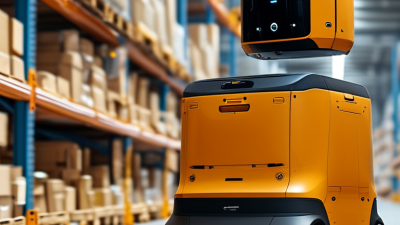
Chinese manufacturers supply a broad range of material handling equipment: forklifts, pallet trucks, conveyors, hoists, cranes, and automated storage systems. Each solves a different movement problem. A forklift turns tightly between pallet racks; a conveyor keeps cartons moving along a fixed route. For warehouses with changing layouts, automated guided vehicles can offer flexibility, though floor conditions and traffic planning matter more than brochures suggest.
Automation is a growing part of the picture. The International Federation of Robotics’ World Robotics 2024 report recorded 276,288 industrial robots installed in China during 2023, about 51% of global installations. This is not a count of warehouse machines or material handling sales. It is useful context for the wider automation supply base. Asia accounted for roughly 70% of global robot installations that year, indicating strong regional demand and manufacturing capacity.
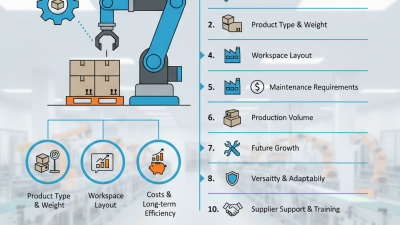
Buyers should compare load capacity, lift height, duty cycle, aisle width, and service access across equipment categories. For example, a high-capacity forklift may suit outdoor yards, while narrow-aisle reach trucks use indoor space more efficiently. Automated storage and retrieval systems can increase storage density, but require careful integration with software and building design. Details get missed. I would also check spare-parts availability and operator training before treating a low purchase price as a saving. These choices are rarely one-size-fits-all.
Leading material handling equipment manufacturers in China serve warehouses, factories, and distribution centers with equipment for moving, lifting, and storing loads. Their product ranges may include forklifts, pallet trucks, stackers, conveyors, and automated systems. Strong manufacturers do more than list models. They explain rated capacity, operating limits, and suitable working conditions. Ask how lifting capacity changes at different load heights. Request layout drawings and maintenance schedules before comparing quotations. Clear answers matter.
Check quality procedures, component documentation, and product testing records. For automated equipment, ask how sensors respond to blocked aisles or unexpected stops. Also review spare-parts availability, technician training, and response times in your region. A low purchase price can look attractive, but downtime may cost more. One detail is easy to miss: aisle width and floor condition can affect equipment choice as much as load weight. Buyers sometimes focus too heavily on catalog specifications. That is worth correcting.
Tips: Share your load dimensions, daily operating hours, aisle measurements, and floor conditions with potential suppliers. Ask for a written proposal that explains assumptions, exclusions, and service arrangements. Compare the same requirements across manufacturers, not just headline prices.
When evaluating Chinese material handling equipment manufacturers, compare verified production capability, not catalogue breadth. IFR’s World Robotics 2024 reports that China installed 276,288 industrial robots in 2023, about 51% of global installations. This signals a large automation base, but it does not prove that any supplier makes reliable conveyors, lift tables, or pallet trucks. Keep that distinction clear.
Ask for drawings, rated-load test records, component specifications, and maintenance intervals. Then compare them against your actual duty cycle: pallet weight, aisle width, shift length, and floor condition. A factory visit should include a live production check, not only a presentation room. Small details matter. Look at weld consistency, cable protection, and how finished units are packed. A polished audit sheet can still hide gaps; I would treat it as evidence, not a verdict.
MHI’s 2024 Annual Industry Report found that 55% of respondents planned to increase supply-chain technology investment over the following two years. Buyers should therefore assess integration and after-sales support alongside price. Request a written spare-parts lead time, warranty exclusions, and response targets, then compare total ownership costs over several years. Ask for customer references using similar loads and operating hours. One weak point: quoted service times may depend on parts availability, so test that assumption before signing.
| Evaluation Dimension | What to Compare | Evidence to Request | How to Assess It |
|---|---|---|---|
| Product and Application Fit | Equipment type, rated capacity, lift height, load dimensions, aisle width, duty cycle, floor conditions, and operating environment. | Product specifications, load charts, drawings, configuration lists, and written confirmation of the proposed operating limits. | Check that the proposed configuration matches the actual load, travel path, operating hours, and site conditions—not just the headline capacity. |
| Engineering and Customization | Ability to adapt dimensions, attachments, controls, power systems, guarding, and interfaces to the application. | General arrangement drawings, interface details, design-change records, and examples of comparable completed projects with customer details redacted if needed. | Review technical responses for clear assumptions, revision control, and documented approval before production. |
| Safety and Regulatory Compliance | Applicable safety requirements for the equipment type and the destination market, including guarding, stability, warnings, and operating instructions. | Risk assessment, test reports, declarations or certificates applicable to the specific product, and manuals in the required language. | Verify documents against the exact model and configuration. For example, ISO 3691-1 addresses safety requirements for certain industrial trucks; applicable requirements depend on equipment and market. |
| Quality Management | Documented inspection processes, traceability, nonconformance handling, and control of outsourced components. | Current quality-management certificate, scope and issuing-body details, inspection plans, sample inspection records, and corrective-action procedures. | Confirm that the certificate covers the relevant manufacturing site and activities. A management-system certificate does not by itself prove that a particular product meets its specification. |
| Manufacturing Capability | In-house processes, production capacity, equipment, skilled personnel, and control of critical manufacturing steps. | Factory audit access, process flow charts, production schedules, calibration records, and a list of outsourced operations. | Check whether capacity claims are supported by current production records and whether subcontracted processes are monitored. |
| Materials and Component Traceability | Identification and traceability of critical materials and components such as structural steel, hydraulic parts, motors, batteries, and control systems. | Material certificates where applicable, component specifications, serial-number records, and supplier-control procedures. | Trace a sample finished unit back to relevant component and inspection records; confirm that substitutions require approval. |
| Testing and Product Validation | Functional, load, endurance, electrical, braking, and safety tests relevant to the equipment and its intended use. | Test plans, acceptance criteria, dated test reports, instrument calibration records, and factory acceptance test procedures. | Agree on measurable acceptance criteria before ordering and, where practical, witness a factory acceptance test before shipment. |
| Spare Parts and After-Sales Support | Parts availability, service response process, remote troubleshooting, technician training, and warranty terms. | Spare-parts list, recommended critical spares, warranty document, service escalation process, and training materials. | Confirm support coverage in the destination region, expected response arrangements, and how parts are identified and ordered. |
| Export and Documentation Readiness | Export packing, shipment coordination, product labeling, manuals, and consistency of commercial and technical documents. | Sample packing list, commercial invoice, bill-of-material or specification sheet, packaging details, and shipping-document checklist. | Check that model numbers, quantities, weights, and configuration details match across the approved order and shipment documents. |
| Total Cost of Ownership | Purchase price plus installation, commissioning, energy or fuel, maintenance, consumables, spare parts, and expected downtime. | Itemized quotation, recommended maintenance schedule, consumables list, parts pricing, and service assumptions. | Compare offers using the same operating assumptions and evaluation period; do not compare purchase prices alone. |
| Commercial Terms and Project Control | Payment milestones, lead time, delivery terms, change control, inspection rights, and remedies for nonconformity. | Detailed quotation, sales contract, production timeline, approved specification, and inspection and acceptance clauses. | Ensure technical scope, delivery responsibilities, acceptance criteria, and change approvals are written into the contract. |