In 2026, material handling robots are becoming practical tools for warehouses, factories, and distribution centers. They move cartons, pallets, totes, and components through demanding environments. Yet the “best” robot depends on the work. A compact autonomous mobile robot may suit a narrow fulfillment aisle. A heavy-duty automated guided vehicle may perform better near pallet racks and loading bays.
Julie Shah, an MIT robotics researcher and human-robot collaboration expert, has emphasized, “The goal is not to replace people, but to make people more effective.” That principle should guide every serious comparison. The strongest systems reduce unnecessary walking, improve inventory movement, and support safer workflows. They do not simply look impressive in a product video.
This guide examines leading material handling robots through practical criteria. We consider payload capacity, navigation accuracy, battery endurance, software integration, safety features, maintenance needs, and total ownership cost. Real performance matters more than promotional speed claims. A robot that moves quickly but stops frequently can delay an entire shift.
Warehouse conditions also change. Floors become crowded. Labels fade. Packages arrive in unexpected sizes. No ranking is perfect. Some robots may perform brilliantly in controlled facilities but struggle with mixed traffic or irregular layouts. That weakness deserves attention.
The following evaluation compares robot categories and leading solutions for 2026. It focuses on measurable value, not novelty. Readers should still test shortlisted systems in their own facilities. A carefully planned pilot can reveal problems that specifications hide.
Robot Categories Used in Material Handling
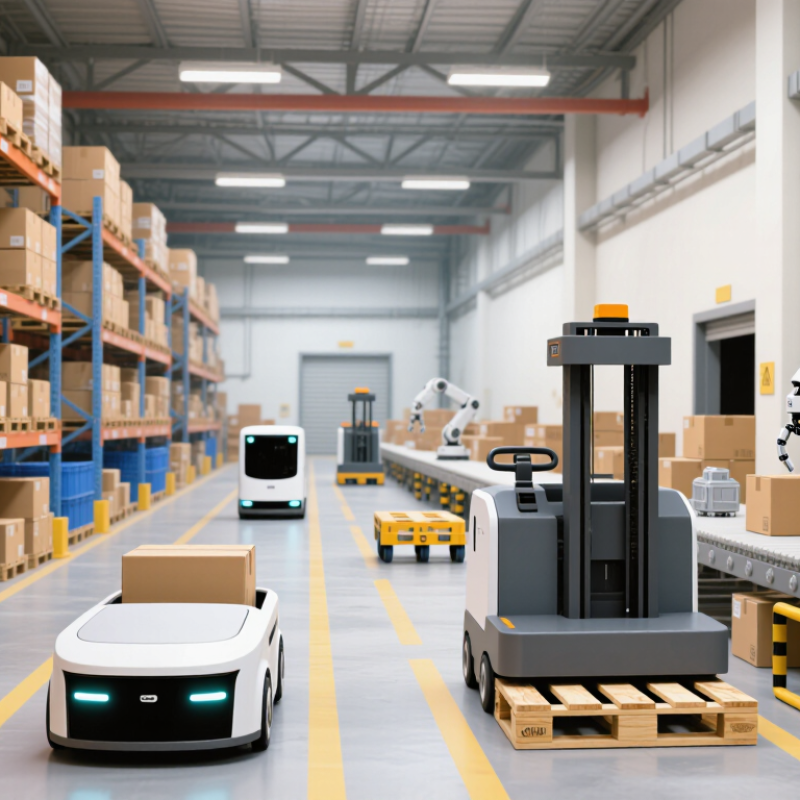
Mobile robots move pallets, totes, and parts between receiving, storage, and production. Autonomous mobile robots navigate changing routes, while automated guided vehicles usually follow defined paths. That difference matters when aisles shift or people share floor space. The International Federation of Robotics reported 541,302 industrial robot installations worldwide in 2023, across many applications. That figure signals broad automation growth, not a guarantee that every facility needs a robot.
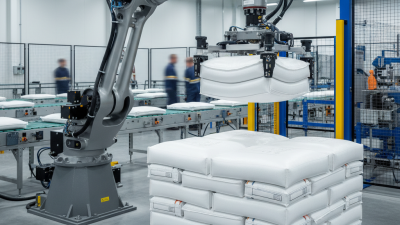
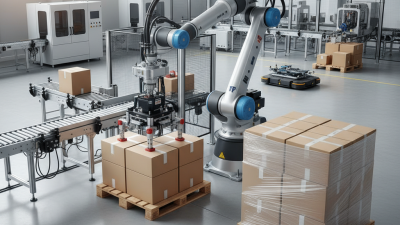
Fixed robotic arms handle repeatable tasks such as machine loading, case picking, and palletizing. They suit stable work zones, especially when loads and pickup points stay consistent. For tall racks or long spans, gantry robots can cover a large area without occupying much floor space. Mixed operations may combine mobile bases with arms, but coordination adds complexity. Test the real load, aisle width, floor condition, and handoff points. Small details matter.
The IFR’s World Robotics 2024 report counted about 4.28 million industrial robots operating in factories at the end of 2023. That stock includes many robot types, so it should not be read as a material-handling count. Choosing by category alone is tempting. Yet cycle time, payload, safety zones, and maintenance access often decide whether a system works on a busy shift. Measure the bottleneck first; the best fit may be less advanced than expected.
The best handling robot depends on the task, not the marketing label. Start with payload, reach, cycle time, and positioning accuracy. A system moving 20-kilogram cartons needs different mechanics than one handling small components. Measure the gap. Record actual loads, aisle widths, and pickup heights during normal shifts.
Throughput should include loading, movement, gripping, placing, and charging time. A fast arm can still underperform when its gripper slips or its software pauses. Watch the handoff. Test performance during peak demand, not only in a quiet demonstration. In my experience, small delays at conveyors often create larger bottlenecks downstream.
Safety features require practical inspection. Check obstacle detection, controlled stopping, emergency access, and safe operation near workers. Integration also matters. The robot should communicate reliably with warehouse software, sensors, conveyors, and existing control systems. Poor integration can erase expected productivity gains.
Evaluate uptime, maintenance access, spare-part availability, and technician training. Dust, temperature changes, uneven floors, and reflective packaging may reduce reliability. Test the dust. Test damaged boxes too. Energy use and battery recovery affect operating costs over several years. No scorecard is perfect. Teams sometimes overvalue speed and underestimate changeover time, cleaning, and operator learning. A careful trial with recorded data usually reveals more than a polished specification sheet.
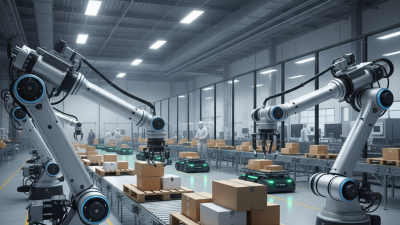
In 2026, material handling robots are becoming less about spectacle and more about predictable movement. Autonomous mobile robots, or AMRs, use cameras, lidar, and software to navigate changing warehouse routes. They can carry totes from picking stations to packing benches, then reroute around a dropped carton. That flexibility suits facilities with shifting product mixes. However, mapping is not magic. Reflective floors, blocked sensors, and poorly marked crossings can still slow an entire shift. Human observation remains essential during deployment.
Automated guided vehicles, or AGVs, follow fixed paths, magnetic markers, or floor guidance. Their routes are less flexible, but their behavior is easier to measure. AGVs work well between storage zones, production lines, and loading areas where traffic stays stable. Pallet-moving robots add heavier capability. They can lift, position, and stage full pallets near dock doors, reducing repeated forklift travel. Clearance matters. A narrow turning radius can create delays instead of efficiency.
Robotic arms handle repetitive palletizing, depalletizing, sorting, and case transfer tasks. Vision systems help them recognize varied carton sizes, while force control protects fragile goods. Shuttle systems and robotic storage units support dense inventory locations, especially when vertical space is expensive. The right choice depends on load weight, aisle width, floor quality, software integration, and worker interaction. A technically impressive robot may still be a poor investment if maintenance skills are unavailable. Early trials should measure missed transfers, charging downtime, recovery time, and operator feedback. Some installations will need redesign. That is normal.
The best material handling robots in 2026 will depend on the workplace, not a universal ranking. In warehouses, autonomous mobile robots can move totes between storage zones and picking stations. They reduce walking, but poor route design can create traffic near narrow aisles. Fit matters.
In factories, autonomous forklifts and robotic pallet movers support line-side replenishment. They can deliver components to a workstation at fixed intervals, reducing manual searches and empty trips. Sensors must handle dust, reflective wrapping, uneven floors, and changing pedestrian patterns. The International Federation of Robotics reported nearly 113,000 transportation and logistics robots sold in 2023, a 35% annual increase. That growth shows demand, not guaranteed productivity.
Distribution centers need robots that connect receiving, storage, picking, and shipping. A fleet should exchange data with warehouse control systems and pause safely when a dock door changes status. The 2024 MHI Annual Industry Report surveyed more than 1,000 supply-chain professionals and identified robotics and automation as major investment priorities. Yet implementation is rarely perfect. A pilot may perform well in one aisle, then struggle during holiday surges. Managers should measure completed moves, exception rates, charging delays, and worker travel time before expanding. Cheap hardware can become expensive when integration, maintenance, and training are overlooked.
| Robot Type | Typical Load or Payload | Best-Fit Applications | Navigation and Workflow | Key Advantages | Planning Considerations |
|---|---|---|---|---|---|
| Tote and Cart AMR | Usually handles totes, bins, or carts; rated capacity varies by model and carrier. | Order picking, line-side replenishment, tote transfer, and movement between work cells. | Uses onboard sensors and mapped routes to navigate shared indoor spaces and adapt to changing obstacles. | Flexible routing; can support frequent, changing transport tasks without fixed floor tracks. | Requires suitable floor conditions, clear traffic rules, and reliable integration with task-management or warehouse systems. |
| Pallet-Moving AMR | Commonly designed for pallet loads in the hundreds to low thousands of kilograms; confirm the rated capacity for the specific load and floor. | Pallet transfer between receiving, storage, production, staging, and shipping areas. | Autonomously travels between assigned pickup and drop-off points; some models lift or engage pallets directly. | Reduces repetitive pallet travel and can adjust routes as operating conditions change. | Check pallet dimensions, fork or load-interface compatibility, aisle width, turning space, and pedestrian interaction. |
| Autonomous Forklift | Capacity is configuration-dependent; many industrial models handle loads around 1,000–3,000 kg. | Pallet put-away and retrieval, dock-to-staging moves, and transport in warehouses or factories. | Automates forklift-style pickup and placement using mapped routes, sensors, and load-handling controls. | Can automate pallet handling tasks that require lifting, stacking, or access to racking. | Validate lift height, load center, pallet condition, rack clearances, floor quality, and safety procedures. |
| AGV Tugger | Moves one or more carts or trailers; total train capacity depends on the tugger and connected equipment. | Repeatable milk-run routes, factory line supply, and scheduled movement of carts or materials. | Typically follows predefined routes, such as floor markers, reflectors, or other installed guidance systems. | Well suited to stable, repeated routes and predictable delivery schedules. | Route changes may require infrastructure updates or reconfiguration; assess intersections, traffic flow, and cart coupling. |
| Goods-to-Person Shelf AMR | Capacity depends on the shelf, rack, or carrier moved; system specifications determine the allowable load. | E-commerce and parts picking, where mobile robots bring storage units to stationary pick stations. | Moves designated shelves or carriers between storage locations and operator workstations. | Can reduce walking for pickers and support high-density storage workflows. | Requires compatible storage units, carefully planned station throughput, and coordination with inventory software. |
| Robotic Palletizing Arm | Arm payload varies widely by model, reach, and gripper; select it for the combined weight of the item and end-of-arm tooling. | Case, bag, or package palletizing at production lines and distribution-center shipping areas. | A fixed industrial robot places products into programmed pallet patterns; it is commonly integrated with conveyors and safety equipment. | Provides repeatable stacking and can reduce repetitive lifting at suitable, consistent packaging lines. | Assess cycle time, product variation, pallet pattern, gripper design, guarding, and conveyor integration. |
Choosing a material handling robot in 2026 starts with the work area, not the product brochure. Check payload, travel distance, floor condition, aisle width, and peak traffic. A robot carrying a full tote behaves differently from one moving empty. That matters. Map pedestrian crossings, blind corners, and emergency access before setting routes. The International Federation of Robotics reported 4,281,585 industrial robots operating worldwide in 2023, a reminder that automation is now common—but deployment conditions still vary widely.
Safety and integration deserve equal attention. Use a documented risk assessment to define speed limits, stopping zones, and safe behavior around people. Test it loaded. Verify scanner coverage near shelving and at intersections, where blocked sightlines can create surprises. MHI’s 2024 Annual Industry Report found that 55% of surveyed supply-chain professionals planned to invest in robotics and automation. That interest makes reliable integration essential: confirm how the robot exchanges task and status data with warehouse software, and test what happens when Wi-Fi drops. A polished demonstration may not reveal messy handoffs or uneven floors. Run a pilot during a busy shift, record delays and interventions, then revise the layout. The uncomfortable part? Even a well-chosen robot may expose process problems that were already there.