What Is the Best Type of Bathroom Door Hinge? The answer depends on moisture, door weight, usage, and installation quality. A hinge beside a steamy shower faces different conditions from one on a dry powder-room door. Small details matter. A heavy glass door needs a different solution from a lightweight wood door.
Industry reports support this practical approach. The National Kitchen & Bath Association’s 2024 design research highlights wellness, accessibility, and durable materials as important bathroom priorities. These trends affect hardware choices because bathrooms now demand smoother movement, easier cleaning, and longer service life. The 2024 Houzz U.S. Bathroom Trends Study also shows continued investment in bathroom renovations. More renovation spending means homeowners are examining hardware, not only tiles and fixtures. However, these reports do not identify one universal hinge winner. Their findings describe broader design behavior, rather than every installation condition.
For many standard wood bathroom doors, stainless-steel or corrosion-resistant ball-bearing Bathroom Door Hinges offer dependable support and quiet movement. Rising-butt hinges can help a door clear the floor, while concealed hinges create a cleaner appearance. Pivot hinges may suit specific modern layouts, but they require accurate alignment and stronger planning. The best choice is rarely the most expensive one. A polished hinge can still fail when screws loosen, the frame twists, or ventilation remains poor. That part is easy to overlook. Product standards such as ANSI/BHMA A156.1 can help buyers compare architectural hinge performance, but professional fitting remains essential. This guide examines each hinge type through durability, appearance, maintenance, door weight, and real bathroom conditions. The conclusion may be less simple than expected.
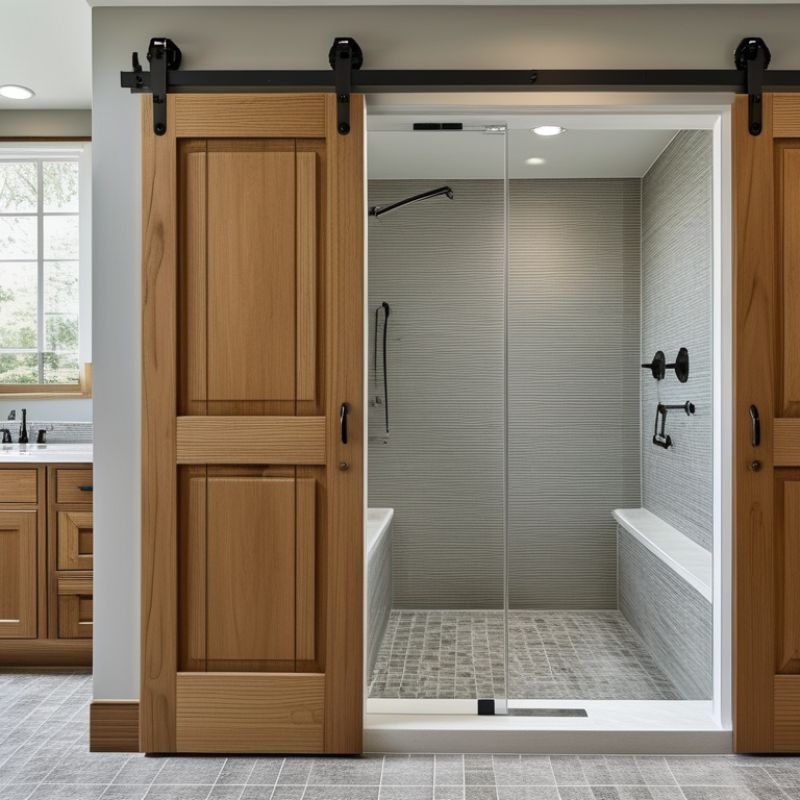
The best bathroom door hinge depends on weight, moisture, clearance, and daily use. Butt hinges remain the practical choice for standard timber doors. They are easy to adjust, replace, and inspect. Three hinges usually support a typical bathroom door, but heavier doors may need four.
ANSI/BHMA A156.1 grades hinge durability through testing from 350,000 to 2.5 million cycles. That benchmark makes hardware selection less guesswork. Still, real bathrooms expose metal to steam, splashes, and cleaning chemicals. Stainless steel or corrosion-resistant finishes deserve attention.
Pivot hinges suit wide, heavy, or frameless doors because the load transfers through floor and head pivots. They also create a clean swing, though poor alignment can cause rubbing. Continuous hinges spread weight along the full door edge. This design reduces stress and can improve stability on busy doors.
Concealed hinges hide the mechanism and support a minimalist appearance, but adjustment is less forgiving. Installation must be precise. Very precise. The National Kitchen and Bath Association’s 2024 Bathroom Design Trends Research Report emphasizes accessibility and long-term usability in bathroom planning.
That supports choosing a hinge with controlled movement, adequate clearance, and simple maintenance. A design can look elegant yet perform badly when wet towels add weight.
My cautious view is simple: butt hinges fit most homes, while pivot, continuous, and concealed designs solve specific structural or visual problems. Clearance should be checked before appearance.
ANSI/BHMA A156.1 grades help compare bathroom door hinges by tested load and durability. Grade 1 hinges typically support a 600-pound test load and complete 2.5 million cycles. Grade 2 usually carries 300 pounds and reaches 1.5 million cycles. Grade 3 is commonly tested at 200 pounds for 350,000 cycles. These figures are performance benchmarks, not promises for every installation. The standard evaluates hinge assemblies under controlled conditions, while real bathrooms add humidity, misalignment, and repeated impact.
For a busy commercial restroom, Grade 1 offers the strongest durability margin. Grade 2 can suit many institutional or residential applications. Grade 3 may fit lighter-duty interior doors with limited traffic. I have seen a modest door fail early because the frame was twisted, even though its hinges met the required grade. Small details matter. Correct screw length, accurate spacing, and proper door clearance reduce stress on the hinge leaves.
Verify the current A156.1 edition, hinge size, door weight, and mounting conditions before specifying a grade. A hinge can pass a laboratory test and still perform poorly when installation tolerances are ignored.
That is the uncomfortable part.
The best bathroom door hinge must resist moisture, cleaning chemicals, and repeated movement. Wet rooms create persistent condensation around hinge leaves and screws. ASTM B117 testing places metal samples inside a controlled salt-fog chamber. Engineers then inspect rust, pitting, and coating breakdown at set intervals.
This test helps compare materials under severe conditions. It does not perfectly recreate a bathroom. Real rooms contain soap residue, warm steam, poor ventilation, and uneven drying. A high test-hour result can still mislead. In practical installations, stainless steel hinges usually provide dependable corrosion resistance. Marine-grade stainless steel often performs better than standard stainless steel. Plated steel may look attractive, but scratches can expose the underlying metal. Brass resists some bathroom conditions, though its surface can change over time.
Hinge design also affects service life. Choose sealed bearings or protected knuckles where moisture collects. Use compatible stainless fasteners, because dissimilar metals can accelerate corrosion. I have seen durable hinges fail after installers used ordinary screws. Small details matter. Check the door weight rating and alignment before installation. A sagging door strains the hinge and damages protective finishes. Wipe away standing water during routine cleaning, especially near the bottom hinge. ASTM B117 results should support the decision, not replace field judgment. One assumption needs reconsideration: laboratory salt fog is useful evidence, but ventilation and maintenance often decide what happens on the bathroom wall.
For an accessible bathroom, the best hinge is not simply the strongest one. In the United States, ADA standards generally limit interior hinged-door opening force to 5 pounds-force, or about 22.2 newtons. A low-friction, ball-bearing hinge can help the door move smoothly. Standard, non-spring hinges are often safer choices than spring hinges, which may add unwanted resistance. Heavy doors, tight seals, and misaligned frames can still defeat a good hinge.
The hinge is only one part of the test. A technician should measure force at the door handle with a calibrated force gauge. The door should open without sticking, scraping, or requiring a sharp pull. Check the closer, latch, weather seals, and floor clearance too. A bathroom door may feel light in the morning but drag after humidity changes. Small details matter.
Offset pivots can provide smooth movement and a clean appearance, but they require careful installation. Concealed hinges may work well, although access for adjustment can be limited. I would not accept a hinge specification alone as proof of compliance. That assumption is incomplete. Review the complete door assembly, confirm the project’s applicable requirements, and test the finished door under real conditions. A quiet hinge is useful. A door that opens easily is essential.
What Is the Best Type of Bathroom Door Hinge?
Choosing a bathroom door hinge starts with the door, not its appearance. Measure the existing hinge size, screw spacing, and door thickness before shopping. A standard interior door may use three hinges, while a heavy solid-wood or glass door needs stronger support. Check the manufacturer’s weight rating carefully. A hinge that feels sturdy can still sag under daily use. I once replaced a noisy hinge without checking the door weight, and the problem returned within weeks.
Material matters in humid rooms. Stainless steel or corrosion-resistant alloys usually perform better near showers and basins. Avoid finishes that easily peel, especially where water splashes often. Satin finishes hide fingerprints, while polished surfaces create a cleaner visual effect but show marks quickly. Match the finish with the handle and other hardware, though exact matching is less important than corrosion resistance. Door movement should remain smooth, without rubbing against the frame.
Tips: Hold the door open and inspect its alignment before removing any hinge. Use longer, suitable screws when the frame allows, but do not overtighten them. Leave a small, even gap around the door. It prevents scraping when humidity changes the wood. Recheck the hinges after several weeks. Bathroom conditions vary, and even a careful choice may need adjustment.
| Hinge Type | Typical Size | Recommended Door Weight | Suitable Door Thickness | Common Materials | Bathroom-Suitable Finishes | Best Use | Selection Checklist |
|---|---|---|---|---|---|---|---|
| Butt Hinge | 75–100 mm high; 2.5–4 mm leaf thickness | Light to medium doors, typically up to 40 kg per three-hinge installation | 30–45 mm | Stainless steel, brass, or plated steel | Brushed stainless steel, polished stainless steel, chrome, or satin nickel | Standard wooden, composite, or lightweight bathroom doors | Best general-purpose choice Confirm the screw-hole pattern, hinge gauge, and manufacturer load rating. |
| Ball-Bearing Butt Hinge | 100–127 mm high; commonly 3–4 mm leaf thickness | Medium to heavy doors, commonly 45–75 kg per three-hinge installation | 35–50 mm | Stainless steel or brass | Brushed stainless steel, satin nickel, or chrome | Heavier solid-core or frequently used bathroom doors | Best for durability Use when the door is heavy, wide, or exposed to repeated opening cycles. |
| Concealed Hinge | Compact adjustable models; cup sizes often 35 mm for cabinet-style applications | Light to medium doors; capacity varies significantly by model and number of hinges | Usually 16–25 mm for furniture-style doors; verify the exact model | Nickel-plated steel, stainless steel, or zinc alloy | Nickel, stainless steel, or corrosion-resistant coated finishes | Modern flush doors, vanity doors, and minimalist interior designs | Best for a hidden look Check the required recess depth, adjustment range, and moisture resistance. |
| Pivot Hinge | Commonly 75–150 mm overall fitting height, depending on the pivot system | Medium to heavy doors; often suitable for doors up to approximately 60–100 kg when correctly specified | 30–50 mm, depending on the frame and pivot set | Stainless steel, brass, or high-strength steel | Brushed stainless steel, polished stainless steel, satin brass, or chrome | Wide, tall, frameless, or design-focused bathroom doors | Best for architectural doors Verify floor and head-frame structure, door clearance, and precise weight limits. |
| Glass Door Patch Hinge | Typically designed for 8–12 mm toughened glass | Light to medium glass doors; commonly 30–50 kg per suitable hinge set | 8, 10, or 12 mm glass; never use on ordinary untempered glass | Stainless steel, brass, or zinc alloy with protective treatment | Brushed stainless steel, chrome, matte black, or polished finishes | Frameless shower enclosures and glass bathroom doors | Best for glass doors Match the hinge to the glass thickness and use safety-rated toughened glass. |
| Spring Hinge | 75–100 mm high; commonly 2.5–4 mm leaf thickness | Light to medium doors, usually up to 40–50 kg depending on the model | 30–45 mm | Stainless steel, brass, or steel with a protective coating | Stainless steel, chrome, satin nickel, or powder-coated finishes | Doors that need automatic closing, including some utility or toilet areas | Best for self-closing action Choose an adjustable model and ensure the closing force does not damage the frame or latch. |
| Rising-Butt Hinge | 75–100 mm high; commonly used in pairs or sets | Light doors, generally up to approximately 25–35 kg depending on the hinge size | 25–40 mm | Brass, stainless steel, or plated steel | Chrome, satin nickel, brass, or stainless steel | Doors that need slight floor-clearance assistance when opened | Best for clearance Check the rise height and avoid use where automatic movement could create a safety issue. |
| Heavy-Duty Stainless-Steel Hinge | 100–127 mm high; approximately 3–5 mm leaf thickness | Heavy solid-core, metal, or laminated doors; commonly 60–100 kg with the correct hinge count | 40–55 mm | 304 stainless steel; 316 stainless steel for high-chloride or coastal environments | Brushed, satin, or polished stainless steel | High-traffic commercial washrooms and humid locations | Best for demanding environments Use corrosion-resistant fasteners and allow extra hinges for tall or wide doors. |
Important: Door weight ratings are typical selection ranges, not universal limits. Always follow the hinge manufacturer’s tested load rating, account for door width and frequency of use, and select corrosion-resistant materials for humid bathroom conditions.
