How to Find Reliable Bulk FIBC Bag Suppliers?

Choosing dependable Bulk Fibc Bag Suppliers is no longer a simple price comparison. It is a risk-control decision involving material quality, load safety, traceability, and delivery consistency. A torn bag can scatter hundreds of kilograms of powder across a warehouse floor. Production may stop within minutes.

Grand View Research reported that the global FIBC market was valued at approximately USD 6.4 billion in 2023. Its analysis also projects continued growth through 2030, driven by agriculture, chemicals, food, and construction materials. IMARC Group identifies rising demand for reusable and customized bulk packaging as another major market driver. These figures suggest opportunity, but they also bring more supplier choices and inconsistent quality. The reports do not guarantee every manufacturer’s reliability.

Ravi K. Sharma, an independent bulk-packaging quality consultant, says, “A strong FIBC supplier proves performance before discussing volume.” That principle deserves attention. Buyers should request test certificates, fabric specifications, safe working load data, and production samples. Verify stitching around the lifting loops. Check whether the liner fits tightly inside the bag. Ask how suppliers manage moisture, contamination, and batch records. ISO 21898 compliance can support evaluation, but it should not replace independent inspection. Small details matter. I have seen purchasing teams focus heavily on unit price and overlook rejected bags, delayed shipments, and unsuitable discharge designs. That approach is understandable, yet incomplete. A practical supplier assessment should compare documented performance, technical communication, factory controls, and after-sales responsibility—not attractive quotations alone.
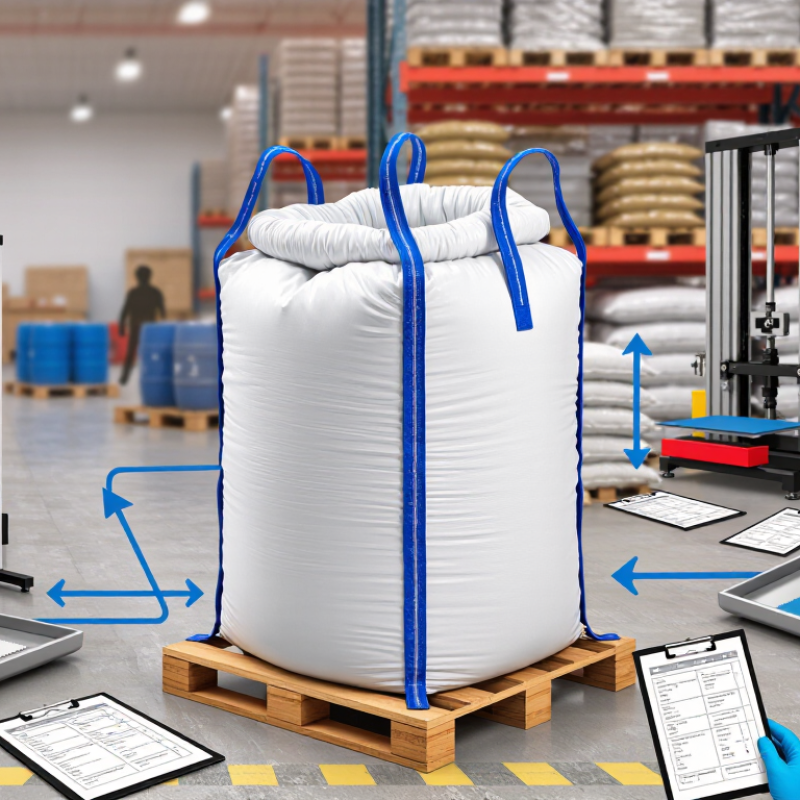
How to Find Reliable Bulk FIBC Bag Suppliers?

Define Your FIBC Bag Requirements and Purchasing Criteria

Reliable bulk FIBC sourcing starts with a precise requirement sheet, not a supplier search. Define the material, filling weight, bag dimensions, fabric construction, liner, lifting loops, and discharge design. Specify the safe working load and safety factor, such as 5:1 or 6:1, according to ISO 21898. A bag handling powder needs different protection than one carrying dry granules.

Think about the journey. Will the bag face rain, sunlight, forklifts, long storage, or repeated handling? Request test records for tensile strength, seam performance, UV resistance, and electrostatic control when relevant. The Smithers report, The Future of Flexible Intermediate Bulk Containers to 2028, identifies food, chemicals, construction, and agriculture as important end-use sectors. Each sector creates different purchasing risks. Food applications may require documented hygiene controls, while outdoor storage demands stronger environmental protection.

Set acceptance criteria before requesting quotations. Include tolerance limits, inspection frequency, sample approval, production lead time, and carton or pallet details. Ask for batch traceability and a certificate matching the delivered specification. The lowest price is not always economical. It may reflect lighter fabric or weaker stitching. I have seen procurement teams overfocus on unit cost. That approach needs reconsideration. A pilot order, drop test, and loading trial can reveal problems before a full shipment leaves the factory. Keep photographs and test results in the supplier file. Reliable decisions need evidence.

Identify Suitable Bulk FIBC Bag Supplier Types

Reliable bulk FIBC bag sourcing starts with choosing the right supplier type. A direct manufacturer suits repeat orders, custom dimensions, and strict construction requirements. Its production team can adjust fabric weight, lifting loops, liner design, and discharge systems. A converter or technical packaging specialist may be better for smaller batches or complex filling conditions. Distributors offer faster delivery, but their technical control can be limited.

According to Grand View Research’s 2024 FIBC market assessment, the global market was valued at approximately USD 6 billion in 2023 and is projected to grow steadily through 2030. This growth attracts more trading companies and regional stockists. Buyers should not treat every supplier equally. A manufacturer should provide factory audit records, material specifications, and test reports. A distributor should clearly identify the actual production site. Ask for recent batch samples. Small details matter.

For hazardous or moisture-sensitive industrial materials, choose a supplier with documented testing and traceability experience. Request proof of seam strength, safe working load, safety factor, and electrostatic performance when relevant. The European Flexible Intermediate Bulk Container Association highlights standardized testing and handling controls as important factors in safe FIBC use. My practical mistake was comparing only unit prices. The cheapest bag often required stronger pallets and slower filling. That calculation was incomplete. Supplier type, delivery distance, quality records, and technical support should be assessed together.

How to Find Reliable Bulk FIBC Bag Suppliers?

Identify Suitable Bulk FIBC Bag Supplier Types

This indicative procurement score compares common supplier types across quality control, customization capability, bulk pricing, production capacity, and supply-chain transparency. Direct manufacturers generally provide the strongest option for large, specification-sensitive FIBC orders, while distributors and sourcing agents may be more suitable for smaller or multi-product purchases.

Verify Supplier Quality, Certifications, and Production Capacity

Reliable bulk FIBC sourcing starts with evidence, not a polished website. Ask suppliers for current certificates, test reports, and production records. ISO 21898 outlines requirements for flexible intermediate bulk containers used with non-dangerous goods. Verify that the certificate covers the actual bag design, fabric, liner, and intended load.

Quality checks should include fabric denier, seam strength, safe working load, and drop-test results. Request samples from normal production, not specially prepared batches. An accredited laboratory should issue key test reports under ISO/IEC 17025. OECD’s Global Plastics Outlook (2022) reports that global plastics production reached 460 million tonnes in 2019. This increases the importance of resin traceability and honest recycled-content claims. Ask for batch numbers, material declarations, and inspection records. Small details matter.

Production capacity needs physical verification. Review loom numbers, coating lines, sewing stations, warehouse space, and monthly output records. Compare claimed capacity with recent purchase orders and staffing levels. Check whether subcontractors handle printing, liners, or final inspection.

A supplier may promise 100,000 bags monthly, yet lack enough inspection staff. That is easy to miss. Require a pilot order with defined tolerances, packaging instructions, and shipment dates. Keep photos, signed reports, and corrective-action records. A perfect audit can still miss a weak shift change or inconsistent seam work, so repeat inspections when the order becomes routine.

Compare Pricing, Minimum Orders, and Delivery Terms

Reliable bulk FIBC bag sourcing depends on more than the unit price. Grand View Research estimates that the global FIBC market reached about USD 6.1 billion in 2023. Demand is growing, but supplier quality still varies widely. Request identical specifications from at least three suppliers. Compare bag price, printing, liners, testing, packaging, freight, insurance, and import costs. A low quote can be a trap.

Minimum order quantities also affect real purchasing cost. A supplier offering 5,000 bags may charge more per unit than one requiring 20,000 bags. However, excess stock can absorb warehouse space and cash. Ask whether the MOQ applies to one design, one fabric grade, or the full order. Request a pre-production sample. Check stitching, lifting loops, coating, dimensions, and safe working load. I once focused too heavily on price. The weaker stitching created delays.

Tips: Build a comparison sheet. Record MOQ, lead time, payment terms, inspection rules, and replacement policies. Use the same delivery term for every quotation. UNCTAD’s Review of Maritime Transport reports continued volatility in shipping costs and schedules. Therefore, ask for both port and door delivery prices. Confirm production time separately from transit time. Add a realistic buffer. Delivery promises often look clearer than they are. A written escalation plan helps when vessels, materials, or inspections change.

How to Find Reliable Bulk FIBC Bag Suppliers? — Compare Pricing, Minimum Orders, and Delivery Terms
Supplier Profile Typical FIBC Specification Estimated Wholesale Price
per Bag (USD)
Minimum Order Quantity Sample Policy Production Lead Time Typical Ocean Transit Time Common Trade Terms Payment Terms to Request Quality Documentation Reliability Check
Profile A
Standard Construction
90 × 90 × 110 cm; 1,000 kg SWL; uncoated woven PP; four corner loops; open top; flat bottom $1.80–$2.60 500–1,000 bags 1–3 pieces; sample and freight usually chargeable 15–25 calendar days after artwork and deposit approval 25–40 days, depending on route FOB, CFR, CIF 30% deposit; 70% before shipment or against approved inspection Product specification sheet; SWL and safety-factor declaration; batch inspection report Good for non-hazardous dry goods
Profile B
Coated Bulk Bag
90 × 90 × 120 cm; 1,000 kg SWL; laminated PP fabric; duffle top; discharge spout; four loops $2.40–$3.60 500–1,000 bags 1 finished sample plus fabric swatch 20–30 calendar days 25–45 days FOB, CFR, CIF 30% deposit; balance after pre-shipment inspection Fabric GSM record; seam-strength test; dimensional inspection; loading photos Suitable where moisture resistance is required
Profile C
Food-Contact Grade
90 × 90 × 100 cm; 1,000 kg SWL; virgin PP; food-contact inner liner; hygienic packing; four loops $3.20–$5.20 500–1,000 bags 1–2 samples; liner and cleanliness checks recommended 25–35 calendar days 25–45 days FOB, CFR, CIF 30% deposit; 70% after documentation and inspection approval Food-contact declaration; migration test where applicable; hygiene procedure; certificate of analysis Verify destination-market food regulations
Profile D
UN-Certified Design
90 × 90 × 120 cm; certified for applicable dangerous-goods packaging; coated PP; liner; discharge spout $4.50–$7.50 500–1,000 bags 1 sample; certification and test-report review required 30–45 calendar days 25–50 days FOB, CFR, CIF 30% deposit; balance after certificate verification and inspection Valid UN certificate; test report; production batch traceability; marking approval Do not accept certification claims without verification
Profile E
Anti-Static Type C
90 × 90 × 120 cm; conductive grounding system; 1,000 kg SWL; antistatic fabric; discharge spout $5.00–$8.50 500–1,000 bags 1 sample with resistance and grounding test 30–45 calendar days 25–50 days FOB, CFR, CIF 30% deposit; balance after electrical testing and inspection Surface-resistance test; grounding continuity record; SWL and safety-factor documentation Require documented testing before filling hazardous products
Profile F
Ventilated Agricultural Bag
90 × 90 × 120 cm; ventilated woven PP panels; 1,000 kg SWL; four loops; optional liner $2.60–$4.20 500–1,000 bags 1 sample; airflow and seam inspection recommended 20–30 calendar days 25–45 days FOB, CFR, CIF 30% deposit; 70% before shipment after inspection Fabric specification; seam-strength report; ventilation pattern approval; packing list Check compatibility with the crop and storage environment
Profile G
Printed Custom Design
Customer-selected dimensions; 500–2,000 kg SWL; coated or uncoated PP; custom printing; selected top and bottom $2.20–$5.80 1,000–3,000 bags Pre-production sample or digital artwork proof 25–40 calendar days after artwork approval 25–50 days FOB, CFR, CIF, DAP 30% deposit; balance against inspection and shipping documents Artwork proof; color approval; dimensional report; fabric and seam test results Confirm color tolerance and replacement policy for defects
Profile H
Small Trial Order
Standard 90 × 90 × 110 cm; 500–1,000 kg SWL; plain white PP; standard loops and openings $2.80–$5.50 100–300 bags 1 sample; higher unit price is common 15–30 calendar days 25–45 days EXW, FOB, courier or air freight Payment before production is common for small orders; use escrow where available Basic specification sheet; photos; pre-shipment quantity check Useful for validating quality before a full container order
Benchmark note: The prices and lead times above are indicative wholesale-market ranges for new polypropylene FIBC bags and vary with fabric weight, SWL, safety factor, liner, printing, certification, order quantity, port, season, and freight conditions. Request a dated quotation, confirm the Incoterm and destination port, and require pre-shipment inspection before placing a large order. Typical FIBC specifications should be checked against the applicable packaging, transport, food-contact, or dangerous-goods requirements for the destination market.

Evaluate Samples, Communication, and Long-Term Reliability

Finding a reliable bulk FIBC bag supplier starts with physical samples, not polished catalog photos. Request samples matching the intended capacity, fabric weight, liner, lifting loops, and discharge design. Check seam density by hand, inspect stitching under bright light, and measure dimensions after filling. A sample can look excellent while failing under repeated handling. Ask for test records covering safe working load, stacking, and drop performance. Independent verification is useful when the application carries serious operational risk.

Communication reveals more than a fast quotation. Send a written specification and request a line-by-line confirmation. A dependable supplier asks practical questions about filling equipment, storage duration, humidity, and transport. Clear drawings and revision numbers prevent expensive misunderstandings. Keep messages, approvals, and corrective actions in one traceable file. Slow replies are not always a failure; vague replies are. I have accepted confident answers before, then discovered that “standard” meant different things to different teams. That mistake was avoidable.

Long-term reliability requires evidence after the first order. Review batch consistency, delivery records, packaging quality, and complaint response. Request production photos or inspection reports tied to lot numbers. Check whether the supplier can explain raw-material changes before shipment. Capacity matters during urgent periods, but promises need proof. A small trial order may expose weak labeling or uneven seams. Do not ignore those details. However, one imperfect batch should trigger investigation, not an instant judgment. Compare the corrective action, timeline, and follow-up sample. Trust grows through repeated, documented performance, not friendly conversations alone.
