Why Choose Robotic Palletizing Solutions for Your Business?
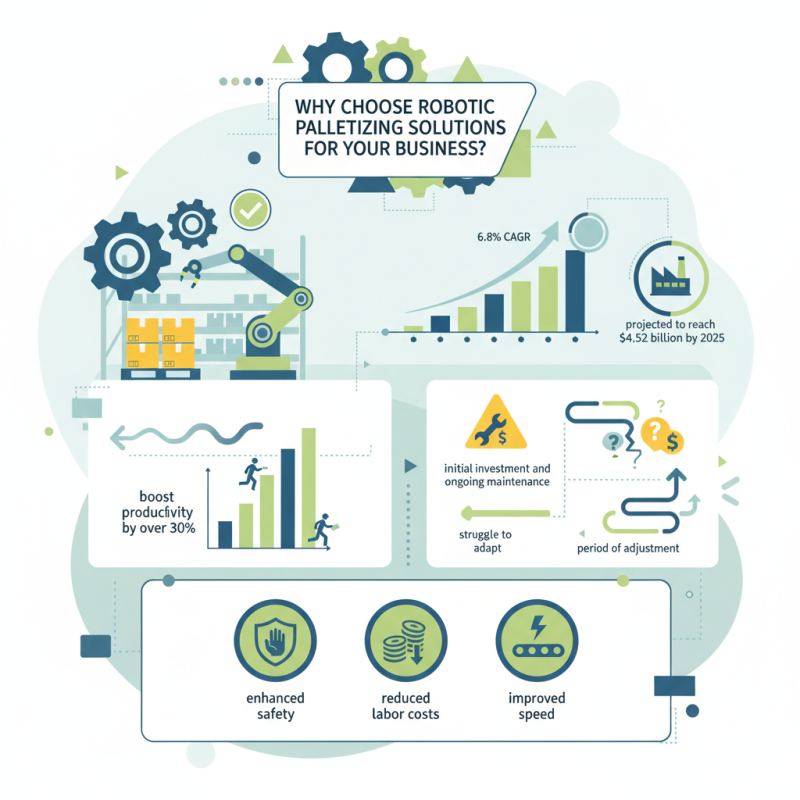
In today's competitive landscape, businesses must adapt to meet increasing demands. Robotic palletizing solutions have emerged as a pivotal response in achieving operational efficiency. According to a report by MarketsandMarkets, the automated palletizing market is projected to reach $4.52 billion by 2025, reflecting a compound annual growth rate (CAGR) of 6.8%. This rapid growth underscores the rising reliance on automation for productivity.
Companies can significantly enhance their workflows by implementing robotic systems. These solutions minimize human error and reduce product damage. Data from the International Federation of Robotics indicates that automated processes in warehouses can boost productivity by over 30%. Yet, it’s crucial to consider the initial investment and the potential need for ongoing maintenance. Some organizations may struggle to adapt to such technology, leading to a period of adjustment.
Despite the challenges, the benefits of robotic palletizing are substantial. Enhanced safety, reduced labor costs, and improved speed create a compelling case for consideration. Companies that embrace these solutions often find themselves ahead of the curve, but their journey may not be entirely smooth. It is essential to fully analyze both the positive and negative aspects of adopting these systems.
Benefits of Implementing Robotic Palletizing in Warehousing
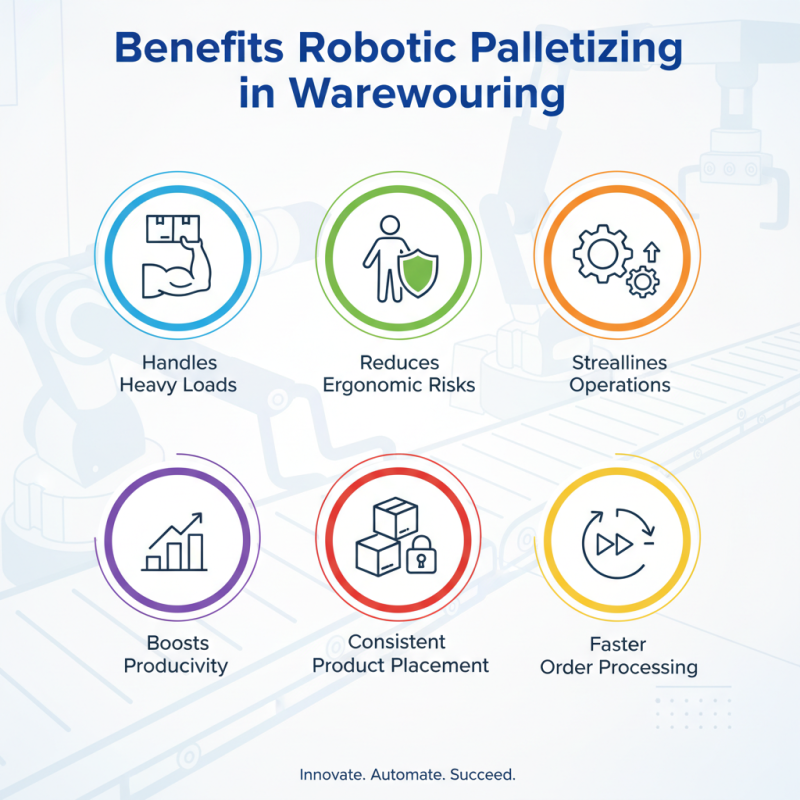
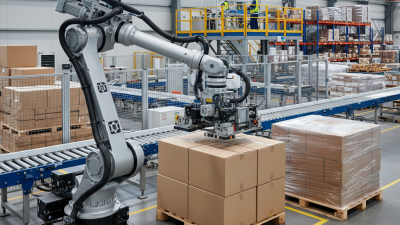
Robotic palletizing solutions are transforming warehousing efficiency. These systems can handle heavy loads with precision, reducing ergonomic risks for workers. They streamline operations and boost productivity significantly. Implementing robotic palletizing can also lead to consistent product placement, ensuring stability during shipping. Businesses can process orders faster with these advanced solutions, meeting customer demands effectively.
Tips: Assess your space before installation. Ensure the layout supports smooth robotic movement. A well-planned environment can reduce potential inefficiencies. Evaluate your product types to select the right robotic arm. Different shapes and weights may require specialized tools.
Workflow integration is essential. Ensure your robotic systems sync with existing software platforms. This allows real-time monitoring and data analysis. Companies may see initial pushback from staff; training is crucial. Workers need assurance that robots enhance their roles, not replace them. Reflect on feedback from employees to improve the implementation process.
Cost Efficiency and ROI of Robotic Palletizers for Businesses
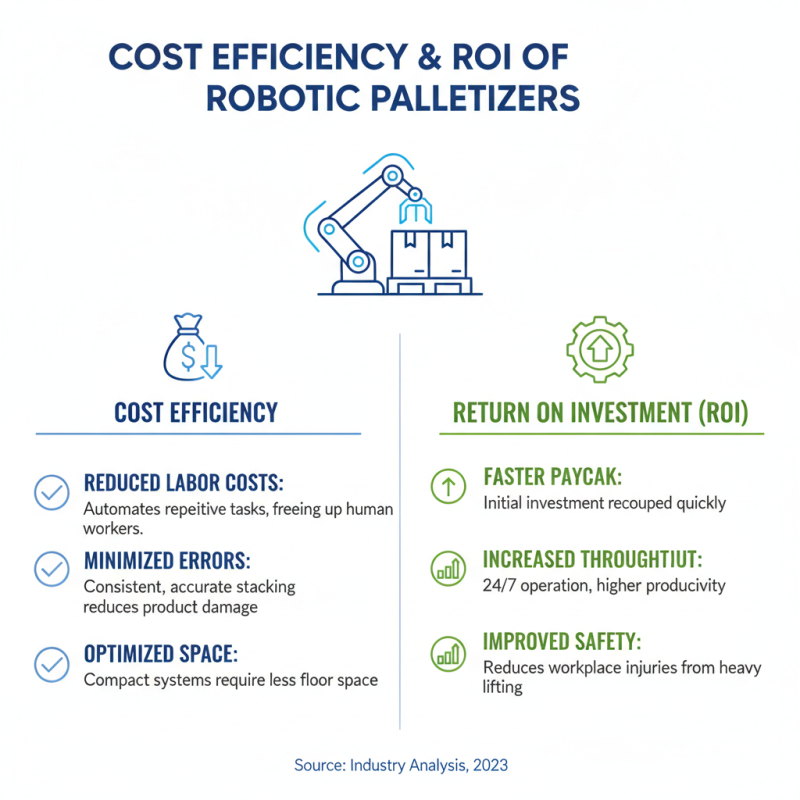
Robotic palletizing solutions have gained significant attention for their cost efficiency and return on investment (ROI). Implementing these systems can lead to a notable reduction in labor costs. Businesses often spend a significant portion of their budget on manual labor for palletizing tasks. Switching to robotic systems can free up valuable manpower for more complex duties.
The initial investment in robotic palletizers may seem high. However, the long-term savings often outweigh these upfront costs. Robots work tirelessly and reduce product damage. They also increase the speed of the palletizing process. Over time, this can result in better overall productivity. Many companies notice a quicker return on their investment, making robotic solutions even more appealing.
Despite their advantages, some businesses hesitate. They might worry about maintenance costs or the complexity of integration. These are valid concerns but can often be addressed with proper planning and training. Businesses may need to evaluate their specific needs and consider the potential for scaling operations in the future, rather than focusing solely on short-term costs.
Comparative Analysis: Robotic vs. Manual Palletizing Solutions
When comparing robotic and manual palletizing solutions, several factors come into play. Robotic systems offer precision and consistency. They can handle heavy loads and operate in harsh environments without fatigue. In contrast, manual palletizing relies on human labor, which can lead to errors and injuries over time. However, workers bring flexibility and adaptability that robots may lack.
One tip for businesses considering a switch to robotic palletizing is to evaluate their specific needs. Understand the types of products being handled and the volume of work. Robots excel in high-throughput situations but might not be as effective for low-volume, varied tasks.
Another critical point is maintenance. While robots generally require less oversight in daily operations, they still need regular checks. An unreliable robot can halt production just as a human worker could. This requires a thoughtful maintenance strategy to enhance reliability.
Investing in training for your team is essential, regardless of the system chosen. Knowledgeable staff can better manage robots and troubleshoot issues. If you choose robots, blend them with human insights for optimal performance.
Key Features to Look for in Robotic Palletizing Systems
When considering robotic palletizing systems for your business, several key features matter. Flexibility is essential. These systems should adapt to various product sizes and shapes. A machine that handles different package types can save time and costs. Look for models that can switch configurations quickly. This adaptability makes it easier to meet demand changes.
Reliability is another critical element. Your operations depend on consistent performance. Choose systems that have a proven track record in real-world applications. Maintenance is also vital. Easy access to components can reduce downtime. Systems that require complex repairs may slow production. It’s worth investing in user-friendly technology.
Safety features cannot be overlooked. Robotics should include protective measures for staff. These may involve safety sensors and emergency stop buttons. Training staff on these features is necessary. A well-informed team can enhance overall productivity. Reflect on your current operations. Are there gaps that a robotic palletizer could fill? Evaluate your needs carefully.
Why Choose Robotic Palletizing Solutions for Your Business?
Future Trends in Robotic Palletizing and Industry Impact
The future of robotic palletizing is set to revolutionize the logistics industry. According to a report by Allied Market Research, the robotic palletizing market is expected to reach $4.8 billion by 2030, reflecting a compound annual growth rate (CAGR) of 10.1% from 2021 to 2030. This growth indicates a strong shift towards automation as businesses seek efficient solutions to rising labor costs and productivity demands.
The integration of artificial intelligence (AI) in robotic systems improves decision-making and adaptability. Robotic palletizers can adjust to varying product sizes and packaging formats seamlessly. However, companies must also consider the challenges of implementation. Training staff and managing the transition can be complex. As pointed out by a recent survey from McKinsey, 40% of business leaders acknowledge the difficulty in integrating advanced robotics into existing workflows. This highlights the need for a thoughtful, measured approach to automation.
Innovation in technology leads to enhanced safety protocols and optimized workflows. Automated systems can minimize human error and reduce workplace injuries. The International Federation of Robotics notes a 30% decrease in accidents when robots handle repetitive tasks. Despite the considerable advantages, companies must assess their unique needs and operational environment. Balancing automation with human labor is a critical challenge that requires reflection and strategy.