Top Industrial Robot Integrators in China for Global Buyers?
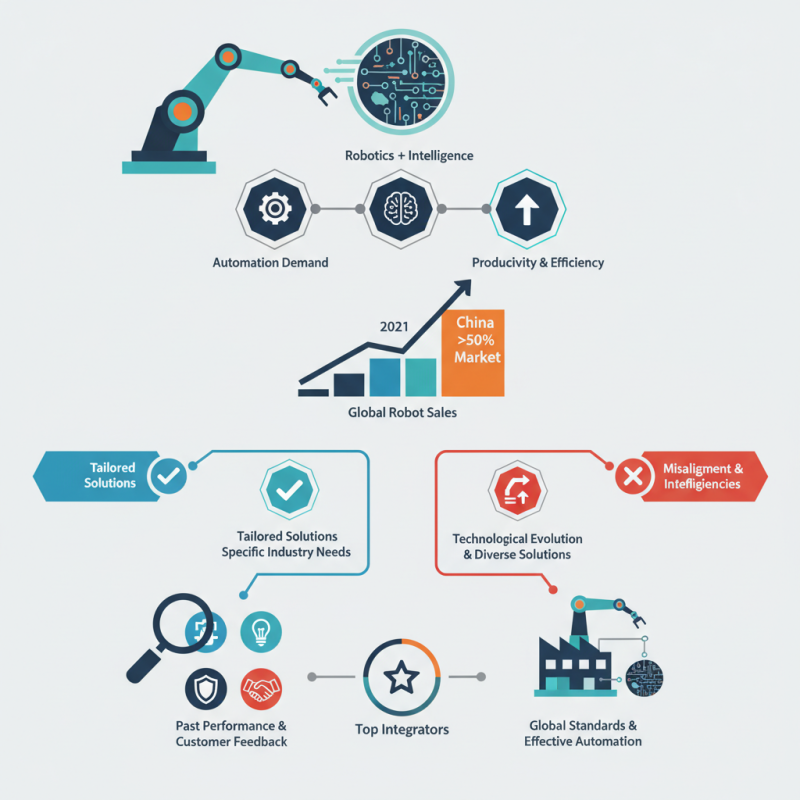
As the demand for automation rises, industrial robot integrators play a critical role in reshaping manufacturing across China. These integrators combine robotics with intelligence to enhance productivity and efficiency. According to the International Federation of Robotics (IFR), global robot sales skyrocketed to 487,000 units in 2021, with a notable increase seen in China, which constitutes over 50% of the market.
In this dynamic landscape, industrial robot integrators are essential for companies seeking to adopt automation. They guarantee that robots are tailored to specific industry needs. However, choosing the right integrator can be challenging, given the rapid technological evolution and the diverse range of solutions available. Some integrators may not fully understand unique operational requirements, leading to misalignment and inefficiencies.
With numerous players in the market, buyers must critically assess integrators. Factors such as past performance and customer feedback are essential. While many integrators claim expertise, genuine capability varies. Discerning buyers can identify the top industrial robot integrators in China, ensuring effective automation solutions that align with global standards.
Overview of Industrial Robot Integration in China
Industrial robot integration in China is rapidly evolving. With a market valuation projected to exceed $10 billion by 2025, the demand for automation grows. Various sectors, including automotive, electronics, and consumer goods, are embracing this trend. In 2022, China accounted for over 44% of global industrial robot installations, reflecting its leading role in the industry.
Yet, challenges persist. Many companies still struggle with integrating these advanced systems fully. Inadequate training and a skills gap hinder effective utilization of robotics. A report from the International Federation of Robotics states that up to 40% of manufacturers find it hard to implement automation due to insufficient technical support.
Furthermore, some businesses face integration delays. The complexity of adapting existing workflows can lead to unforeseen costs. A study revealed that nearly 30% of automation projects exceed original budgets. Balancing innovation with practical application is crucial for long-term success in the industry. Understanding these obstacles is essential for global buyers looking to navigate China’s industrial robot landscape.
Key Players in the Chinese Industrial Robot Market
China's industrial robot market has seen remarkable growth in recent years, positioning itself as a global leader. Research indicates that the market is expected to reach approximately $22 billion by 2025. The rapid adoption of automation across various sectors has driven this demand. Manufacturing industries, particularly automotive and electronics, are increasingly incorporating advanced robotics.
Key players in this landscape are developing diverse robotic solutions tailored to specific needs. Data suggests that 62% of manufacturers in China plan to increase their investment in robotics by 2024. However, the challenge lies in integrating these advanced technologies effectively. Many local companies struggle with implementation and training. This gap highlights the need for ongoing support and specialized knowledge when adopting new robotics systems.
Moreover, collaborative robots, or cobots, are gaining traction. These robots work alongside human operators, enhancing productivity while ensuring safety. Despite their advantages, some industries remain hesitant. Concerns about job displacement persist. Addressing these concerns is vital for widespread acceptance. The call for a skilled workforce remains strong, as expertise in robotics and automation continues to be crucial for successful integration.
Top Industrial Robot Integrators in China
Evaluating the Capabilities of Leading Robot Integrators
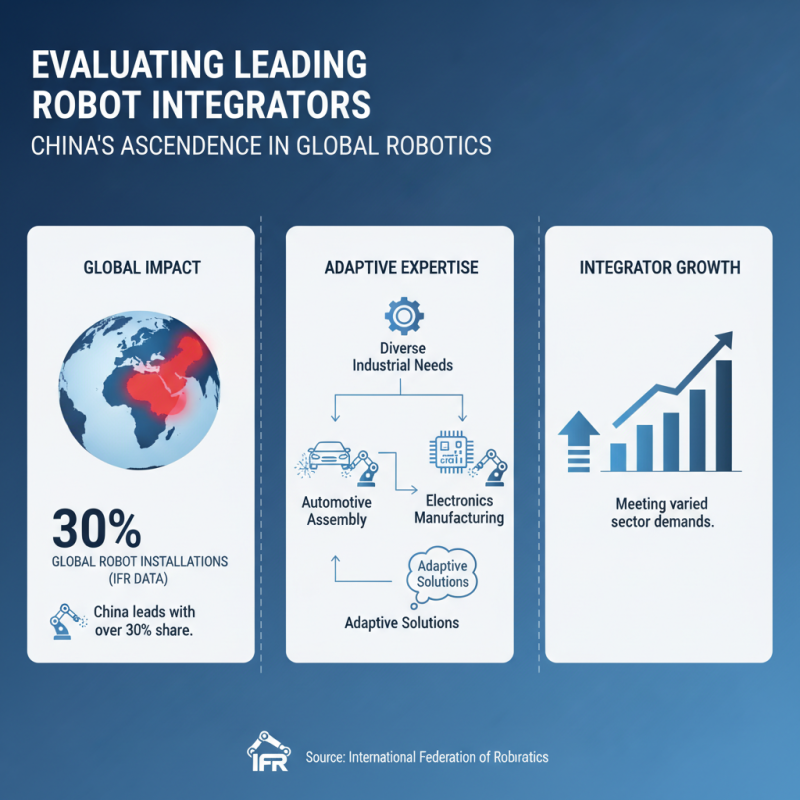
As the global industrial landscape shifts, China emerges as a vital hub for robotics. This is not just speculation; the International Federation of Robotics (IFR) reports that China accounts for over 30% of global robot installations. Numerous leading integrators here are enhancing their capabilities to meet diverse industrial needs. Their specialization ranges from automotive assembly to electronics manufacturing, indicating an adaptive approach to various sectors.
Recent studies have shown that the efficiency of Chinese robot integrators is on par with global standards. They utilize advanced AI technologies and integrated systems, which bolster productivity and reduce operational costs. However, challenges remain. Many integrators still face issues with scalability and customization, particularly in meeting unique client demands. It's crucial that these companies continually reassess their capabilities to refine services.
Moreover, reliability is a critical aspect for buyers. A report from Statista highlights that nearly 70% of manufacturers express concerns over the long-term support from integrators. This sentiment points to a need for integrators to improve their post-installation services. By fostering better communication and support, they can enhance customer satisfaction and drive future growth in this competitive market.
Comparative Analysis of Integration Solutions
In the rapidly evolving landscape of industrial automation in China, several integrators have emerged as leaders in providing tailored solutions. These firms offer various services, including system design, implementation, and ongoing support. Each integration solution may vary significantly in terms of technology, approach, and cost. This presents global buyers with essential choices.
Tips: Consider the specific needs of your production processes. Analyze how an integrator's solutions align with your manufacturing goals. A well-defined project scope can lead to enhanced efficiency and minimized disruptions during implementation.
Moreover, not all integrators possess the same level of expertise. Some focus more on robotics, while others excel in software integration. Buyers must thoroughly evaluate the available options. Understanding the strengths and weaknesses of these companies is critical.
Tips: Engage with industry experts to gather insights about potential integrators. Look for case studies that reflect their successful projects. This information can guide your decision-making process and help identify the right fit for your business needs.
Future Trends in Industrial Robotics in China
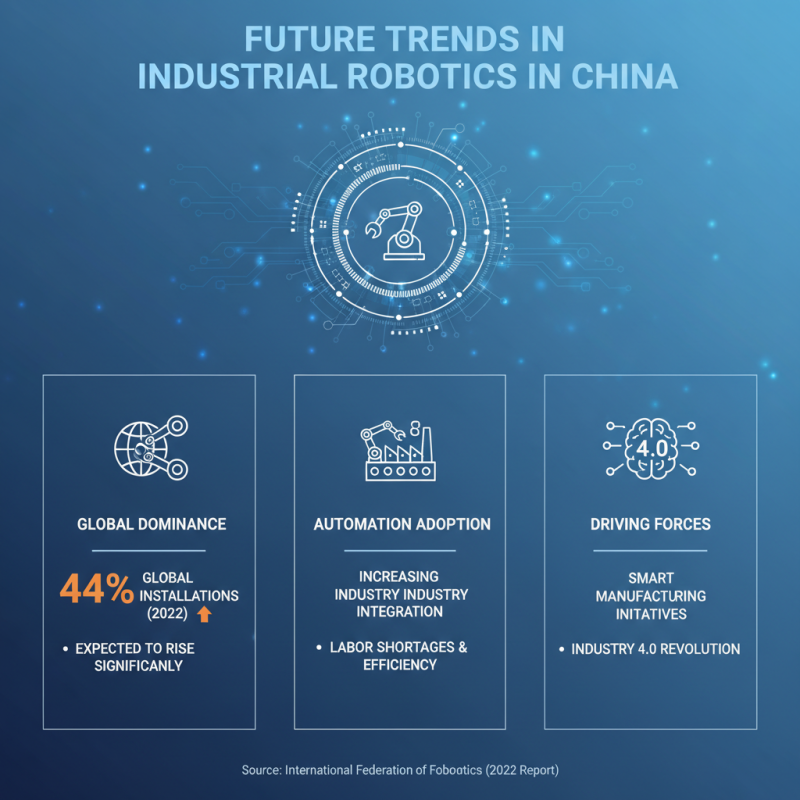
Industrial robotics in China is witnessing rapid transformation. According to a recent report from the International Federation of Robotics, China accounted for 44% of global industrial robot installations in 2022. This number is expected to rise as industries increasingly adopt automation. The push towards smart manufacturing and Industry 4.0 is driving this growth.
Advanced automation technologies are reshaping various sectors. The automotive industry, for instance, is embracing robotics for precision assembly and quality control. However, challenges persist. The skills gap in the workforce may hinder the effective implementation of these technologies. Companies must invest in training programs to bridge this gap.
Tips: Focus on collaboration between human workers and robots. This approach can enhance productivity and mitigate the fear of job displacement. Furthermore, keep an eye on emerging technologies like artificial intelligence. They will continue to influence industrial robotics significantly. Consider evaluating your automation strategy regularly to adapt to changing trends.