Why Are Home Robots in High Demand Worldwide?
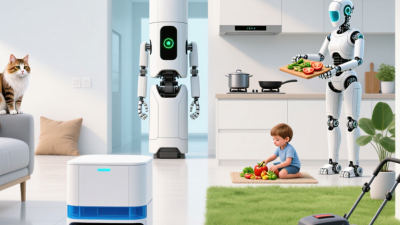
Across many countries, the home robot is moving from science fiction into ordinary household routines. It may vacuum a hallway, monitor indoor air, carry small items, or remind an older adult about medication. These tasks appear modest, yet they address real pressures inside modern homes.
Demand is rising because families face longer working hours, aging populations, and limited access to dependable domestic help. A parent may return home to crumbs beneath the dining table, while an older resident may need simple assistance at night. In such moments, automation offers practical support rather than entertainment alone. Consumer research, technology reviews, and reports from robotics engineers suggest that convenience, safety, and time savings strongly influence buying decisions. However, affordability and repair access still vary sharply across regions.
The appeal is practical. A reliable robot can repeat routine tasks without complaint. Yet performance remains imperfect. Many models struggle with tangled cables, narrow doorways, stairs, or unfamiliar floor surfaces. Trust remains uneven. Users also question data collection, voice recording, and the security of connected devices. These concerns deserve clear answers from manufacturers, independent testers, and consumer protection experts. A useful home robot should be easy to control, transparent about its limits, and safe around children, pets, and older adults. Market growth may continue, but enthusiasm should not replace evidence. The most valuable systems will earn their place gradually, through dependable results in real homes.
Definition and Main Types of Home Robots
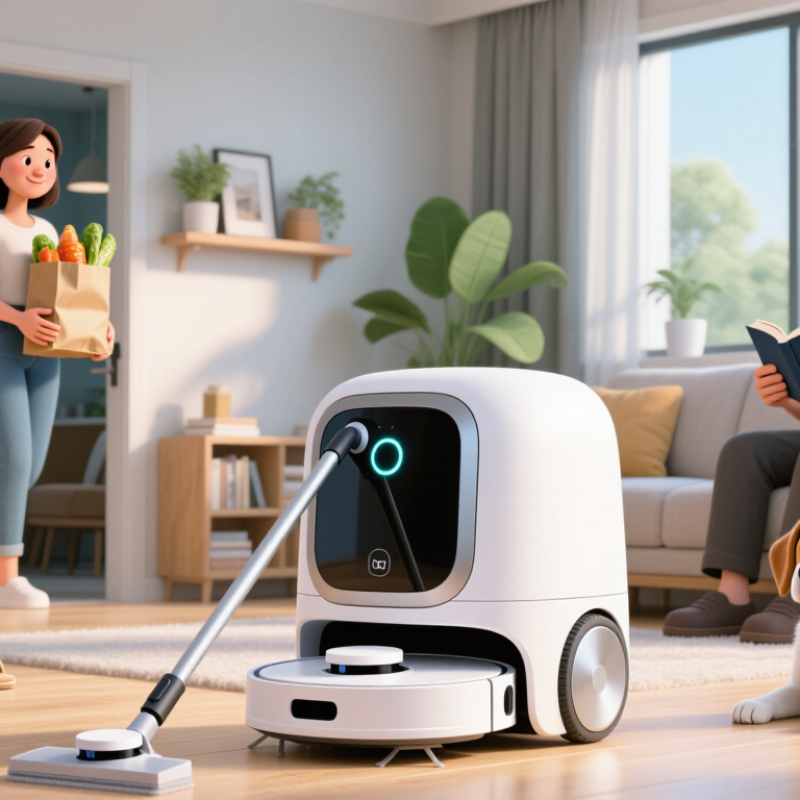
Home robots are autonomous or semi-autonomous machines designed to perform useful tasks indoors. They sense rooms, process instructions, and act through wheels, arms, brushes, or cameras. In practical use, a robot may cross a dusty floor, carry a small load, or remind an older adult about daily routines. It is not a human substitute. Its value depends on safe design, clear controls, and realistic expectations. Household testing often reveals limits that advertisements overlook. A dark rug, loose cable, or sleeping pet can confuse navigation. Small details matter.
The main type is the cleaning robot, which vacuums, mops, or handles narrow spaces. Companion and social robots provide conversation, reminders, or simple entertainment. Assistive robots can support mobility, fetch lightweight objects, or help users maintain independence. Monitoring robots use cameras and sensors to detect unusual movement, smoke, or open doors. Educational robots introduce children to coding through guided activities. The categories overlap. I would not call every smart appliance a robot. A reliable home robot should sense its surroundings, make limited decisions, and respond safely when conditions change. Its map can still be wrong. That imperfection deserves attention, especially in homes with stairs, children, pets, or fragile furniture.
Key Factors Driving Global Demand
Why Are Home Robots in High Demand Worldwide?
Global demand is rising because home robots address ordinary, repeated tasks. Vacuuming, floor mopping, lawn care, and basic monitoring save small amounts of time. Those minutes accumulate across busy households.
The International Federation of Robotics reported nearly 20.5 million consumer service robots sold worldwide in 2023. Domestic-task robots represented most of this volume. The figure signals broad adoption, not universal satisfaction. Performance can weaken on stairs, thick carpets, or cluttered rooms. That gap still needs honest attention.
Population changes also support demand. The United Nations projects that one in six people globally will be over 65 by 2050. Home robots may assist older adults with routine chores and safety alerts. Labor shortages, smaller households, and improved sensors add further pressure. However, affordability remains uneven. High prices can exclude families that might benefit most.
Tips: Check room layouts, maintenance costs, noise levels, and data settings before buying. Choose practical functions over impressive demonstrations. User reviews are useful, but testing conditions differ. Expect assistance, not complete independence.
Why Are Home Robots in High Demand Worldwide? — Key Factors Driving Global Demand
Global evidence indicates that demand is being supported by demographic change, urban living, digital connectivity, household infrastructure, and the need to reduce time-intensive domestic work.
| Demand Driver |
Verified Global Indicator |
Reference Year |
How It Supports Home-Robot Demand |
Source |
| Growing Urban Population |
Approximately 57% of the world’s population lived in urban areas. |
2023 |
Higher population density, smaller living spaces, and busy urban routines increase the appeal of compact robots that automate cleaning, monitoring, and routine household tasks. |
World Bank, Urban Population Indicator |
| Population Ageing |
People aged 65 and above represented about 10.3% of the global population; this share is projected to reach approximately 16% by 2050. |
2023 / 2050 projection |
Ageing households create greater demand for products that support independent living, reduce physical effort, provide reminders, and assist with everyday household activities. |
United Nations, World Social Report 2023 |
| Expansion of Digital Connectivity |
About 5.4 billion people, or roughly 67% of the world’s population, used the Internet. |
2023 |
Reliable connectivity makes app control, remote monitoring, software updates, voice interfaces, and connected-home integration more practical for households worldwide. |
International Telecommunication Union, Facts and Figures 2023 |
| Wider Access to Household Electricity |
Global access to electricity reached approximately 91% of the population. |
2022 |
Broad electricity access expands the addressable market for rechargeable and automated home devices, especially in emerging and developing economies. |
World Bank, International Energy Agency and Sustainable Energy for All, SDG7 Report |
| High Domestic Workload |
People worldwide performed an estimated 16.4 billion hours of unpaid care work per day; women performed 76.2% of total unpaid care work. |
2018 estimate |
Robots that reduce repetitive cleaning and household maintenance can help save time and address unequal domestic-work burdens. |
International Labour Organization, Care Work and Care Jobs Report |
| Large and Diverse Consumer Base |
The global population exceeded 8 billion people. |
2023 |
A very large consumer base enables home-robot adoption across different income levels, housing types, climates, and household needs. |
United Nations, World Population Prospects 2024 |
| Demand for Convenience and Time Saving |
Urbanisation, ageing, Internet access, and electricity access have all expanded substantially over the long term. |
Long-term trend |
The combination of these structural trends makes automation more valuable: consumers increasingly prioritize convenience, predictable household maintenance, and reduced routine effort. |
Synthesis of the indicators listed above |
| Improved Suitability of Smart Devices |
Internet access reached approximately two-thirds of the global population, while electricity access exceeded nine-tenths. |
2022–2023 |
The combination of connectivity and power infrastructure supports more capable home robots with sensors, mapping, remote diagnostics, scheduling, and adaptive automation. |
International Telecommunication Union; World Bank; SDG7 Report |
Note: The indicators describe structural conditions that support global demand; they are not presented as direct sales figures for any specific company, product, or brand.
How Home Robots Support Daily Life
Home robots are moving from novelty to practical household support worldwide. Their value appears in ordinary moments: vacuuming crumbs, carrying light items, or reminding someone about medicine. In my experience, the best support feels quiet rather than impressive. A robot can clean under a sofa while a parent prepares dinner. It can also guide an older adult through a simple video call. Small assistance matters. Yet expectations need care. Most home robots cannot understand every accent, room, or family routine.
Daily support works best when tasks are clear and measurable. A household may set a robot to patrol a hallway, detect spills, or deliver items between rooms. Sensors help it avoid furniture, but carpets, loose cables, and dim light can still cause mistakes. Users should check safety settings, update software, and keep moving parts clean. Personal data deserves equal attention. Cameras and microphones should be limited to necessary spaces, with strong passwords and transparent storage controls. Reliable guidance should come from manuals, qualified technicians, and independent safety testing.
There is a human side. A robot may reduce fatigue for someone with limited mobility, but it cannot replace patience, judgment, or companionship. I have noticed that convenience can create new chores, such as charging batteries and correcting missed instructions. That trade-off is easy to overlook. Better designs should explain failures clearly and allow manual control. When technology supports real routines, rather than forcing new ones, home robots become useful partners in daily life. But that standard remains unfinished.
Technological Advances Enabling Wider Adoption
Why Are Home Robots in High Demand Worldwide?
Technological Advances Enabling Wider Adoption
Home robots are moving beyond novelty because their core technologies are becoming more practical. Better cameras, depth sensors, and simultaneous localization and mapping help machines understand rooms, furniture, and changing obstacles. Edge processing also reduces dependence on constant cloud communication. That matters in homes with unstable internet connections.
The International Federation of Robotics reported nearly 11.9 million consumer service robots sold worldwide in 2023, a 7% annual increase in World Robotics 2024. This growth reflects improving navigation, quieter motors, longer battery life, and simpler app-based control. The Stanford AI Index 2024 also recorded a sharp fall in artificial intelligence inference costs, making useful onboard intelligence more affordable. Small gains matter.
Still, autonomy is uneven. A robot may map a hallway accurately, then hesitate beside a loose cable. Better sensors do not guarantee good judgment. Home environments remain unpredictable, especially around pets, stairs, toys, and reflective surfaces. The NIST AI Risk Management Framework stresses testing, monitoring, and human oversight for reliable AI systems. Manufacturers and researchers should apply that discipline to domestic machines. Adoption will widen when robots fail less dramatically, explain their limits clearly, and recover without constant human rescue. Reliability is improving, but it is not solved.
Why Are Home Robots in High Demand Worldwide?
Technological Advances Enabling Wider Adoption
Wider internet access, near-universal electricity availability, and the growth of mobile connectivity are creating a stronger infrastructure for connected home robots. These indicators support remote control, cloud-based features, software updates, and reliable everyday operation.
Global indicators, 2018–2022. Internet use and electricity access are shown as percentages of population; mobile connectivity is shown as subscriptions per 100 people. Values are rounded. Source: World Bank World Development Indicators.
Challenges and Future Development of Home Robots
Why Are Home Robots in High Demand Worldwide?
Home robots are gaining attention because many households face repetitive work, limited time, and growing care needs. A robot can vacuum a hallway, monitor room conditions, or remind someone about medication schedules. Small tasks matter when they happen every day. Yet usefulness depends on reliability, not novelty. A device that stops beside a carpet edge creates more work than it removes.
Challenges remain substantial. Robots must understand clutter, stairs, pets, soft fabrics, and changing light. Kitchens are especially difficult because objects move constantly. Safe operation also requires careful sensors, clear warnings, and strong protection for personal data. A quiet motor is helpful, but secure software matters more. Current systems can still misunderstand unusual situations. That weakness deserves honest attention.
Future development should focus on adaptable assistance rather than impressive demonstrations. Better robots will learn household routines while allowing residents to correct mistakes easily. They may combine cameras, touch sensors, and voice instructions without storing unnecessary information. Lower energy use and repairable parts could also make ownership more practical worldwide. Affordability remains a serious obstacle. Not every family needs a fully autonomous machine, either. Some may prefer a simpler device that performs two tasks consistently. Designers should test robots in crowded homes, narrow apartments, and multigenerational households. Real rooms are imperfect. That is where meaningful progress will be measured.